

1. Introduction – Why Certifications Matter in Employee Training
In today’s workplace, certifications are more than just certificates on the wall-they’re a powerful way to prove skills, ensure compliance, and build credibility. For HR professionals and compliance officers, employee certification tracking has become an essential part of workforce training strategies.
The rising importance of certifications
Regulated industries are under constant scrutiny, and certifications act as proof that employees are trained to meet strict standards. Whether it’s healthcare, finance, or manufacturing, organizations rely on certified staff to protect both their operations and their reputation.
- Demonstrates compliance with legal and industry regulations
- Reduces risks of costly fines or failed audits
- Ensures employees can perform tasks safely and effectively
Building trust, accountability, and credibility
Certifications also influence how employees are perceived internally and externally. They provide measurable assurance that individuals meet professional benchmarks and can be trusted to deliver consistent results.
- Builds confidence among managers, clients, and regulators
- Encourages employees to take ownership of their professional growth
- Enhances organizational credibility and brand trust
Why tracking is no longer optional
The challenge isn’t just earning certifications-it’s keeping track of them. In fast-paced industries, expiration dates and renewal cycles can make or break compliance efforts. Missing one update can ripple into major risks.
- Certifications must be actively monitored, not left to chance
- Expired or missing documents create immediate compliance gaps
- Tracking ensures both organizational safety and employee accountability
This growing need for structure sets the stage for a deeper look at why employee certification tracking is vital for compliance, motivation, and long-term success.
2. Why Certification Tracking Matters
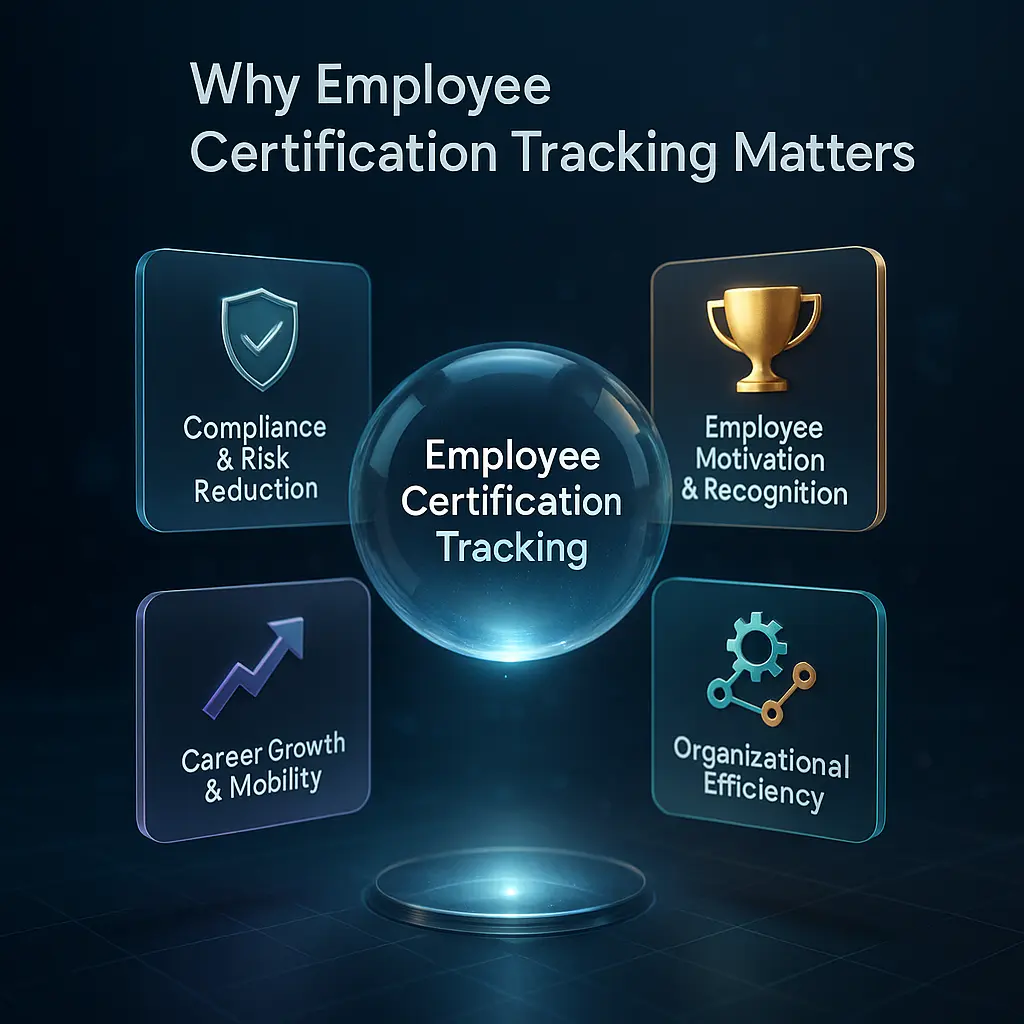
Employee certification tracking is more than a box-ticking exercise-it’s the backbone of maintaining compliance, supporting employee growth, and fostering a culture of recognition. Done well, it benefits both the organization and its people.
Compliance and risk reduction
In heavily regulated industries, missed certifications can quickly turn into costly compliance failures. Having a reliable employee certification tracking system ensures organizations stay audit-ready and avoid unnecessary penalties.
- Reduces risk of failed audits or fines
- Provides documented proof of employee qualifications
- Builds organizational trust with regulators and stakeholders
Employee motivation through structured learning
Certifications give employees clear milestones to work toward. When training is tied to certifications, learning feels purposeful rather than routine.
- Creates a sense of achievement and progress
- Keeps employees engaged with their professional growth
- Encourages continuous development aligned with business needs
Recognition as an engagement booster
Recognition doesn’t always have to come in the form of bonuses or promotions. Acknowledging the hard work behind certifications can significantly boost morale and engagement.
- Celebrates employee achievements in a visible way
- Reinforces a culture of appreciation and accountability
- Strengthens loyalty by showing employees their efforts matter
Career growth and mobility
Certifications aren’t only about compliance; they also serve as stepping stones in an employee’s career path. With proper employee certification tracking, skills and accomplishments become visible and measurable.
- Supports internal mobility and promotion decisions
- Provides employees with credentials for long-term career advancement
- Helps organizations build stronger pipelines of future leaders
By connecting compliance with development and recognition, employee certification tracking transforms from an administrative task into a strategic advantage.
3. How Companies Track Employee Certifications
Organizations use a variety of methods for employee certification tracking, ranging from basic manual processes to advanced automated systems. Each approach comes with its own benefits and limitations.
- Manual methods (paper logs, sign-off sheets)
Simple but outdated; prone to human error and difficult to scale in larger organizations. - Spreadsheets (low-cost, but error-prone)
Easy to implement but quickly becomes messy as data grows, creating high risk of mistakes and missed renewals. - Learning Management Systems (LMS)
Centralizes training and certification records, offering better visibility and control for HR and compliance teams. - Certification management software
Dedicated tools designed for compliance-heavy industries; allows detailed tracking, audit readiness, and reporting. - Automation with AI & reminders
Uses smart alerts, dashboards, and predictive tools to ensure no certification lapses occur.
As organizations mature, employee certification tracking evolves from spreadsheets to robust, tech-driven systems that improve compliance and efficiency.

4. Modern Tools for Certification Tracking
Modern LMS platforms have revolutionized employee certification tracking, replacing manual logs and spreadsheets with automated workflows. Manual methods may work for small teams, but they fall short in large-scale compliance environments.
Learning Management Systems (LMS) have become a practical solution for centralizing certification data. They not only track completions but also combine training, reporting, and recognition in one system. Among these, Advance the Team is an LMS designed to make employee certification tracking more efficient for HR and compliance teams.
Key features that simplify the process include:
- Automated certification expiry alerts to prevent renewals from slipping through the cracks.
- Centralized dashboards that give HR and compliance leaders full visibility across teams.
- Recognition features that allow organizations to acknowledge and celebrate employee achievements in real time.
By combining compliance oversight with motivation and recognition, modern tools like Advance the Team make employee certification tracking smarter, simpler, and more engaging for everyone involved.
5. Challenges in Certification Tracking
Despite its importance, employee certification tracking presents a unique set of challenges for many organizations. HR and compliance teams often face fragmented systems and inconsistent recordkeeping that compromise accuracy.
Key challenges include:
- Heavy administrative workload and manual errors
- Inconsistent data across departments
- Missed renewals leading to compliance gaps
- Limited visibility for managers and auditors
Key challenges include
- Heavy administrative workload and manual errors
- Inconsistent data across departments
- Missed renewals leading to compliance gaps
- Limited visibility for managers and auditors
These issues make it difficult to maintain complete, accurate certification histories. That’s why many organizations are turning to automation and LMS solutions to streamline employee certification tracking and strengthen compliance confidence.
6. How Advanced LMS Solutions Address These Challenges
Advanced LMS platforms are designed to solve the pain points of employee certification tracking—from missed renewals to inaccurate records. By automating manual tasks and centralizing information, they help HR and compliance teams stay proactive rather than reactive.
- Automation reduces errors and missed renewals
Automated alerts ensure that certifications are renewed on time, minimizing compliance risks. - Dashboards simplify compliance monitoring
Real-time dashboards offer transparency into all employee certification tracking activities. - Integration with training programs
Certifications connect directly with learning modules, allowing managers to track progress in one place. - Recognition features boost engagement
Recognition tools turn employee certification tracking milestones into opportunities for celebration and motivation.
Through these features, platforms like Advance the Team transform employee certification tracking into a strategic asset that drives both compliance and employee engagement.
7. The Role of Certificates and Recognition in Engagement
When paired with recognition, employee certification tracking becomes much more than a compliance process—it turns into a motivational tool that fuels pride and commitment.
The psychological boost of earning certifications
Completing certifications and seeing them tracked visibly fosters confidence and accomplishment.
- Employees feel validated for their efforts and progress
- Encourages continuous learning and development
Recognition builds loyalty and retention
Acknowledging achievements recorded through employee certification tracking shows employees that their growth is valued.
- Recognition fosters belonging and appreciation
- Boosts morale by turning compliance wins into shared success
By linking employee certification tracking to recognition and performance, organizations can build a stronger, more engaged workforce that values learning and growth.
8. Best Practices for Efficient Certification Tracking
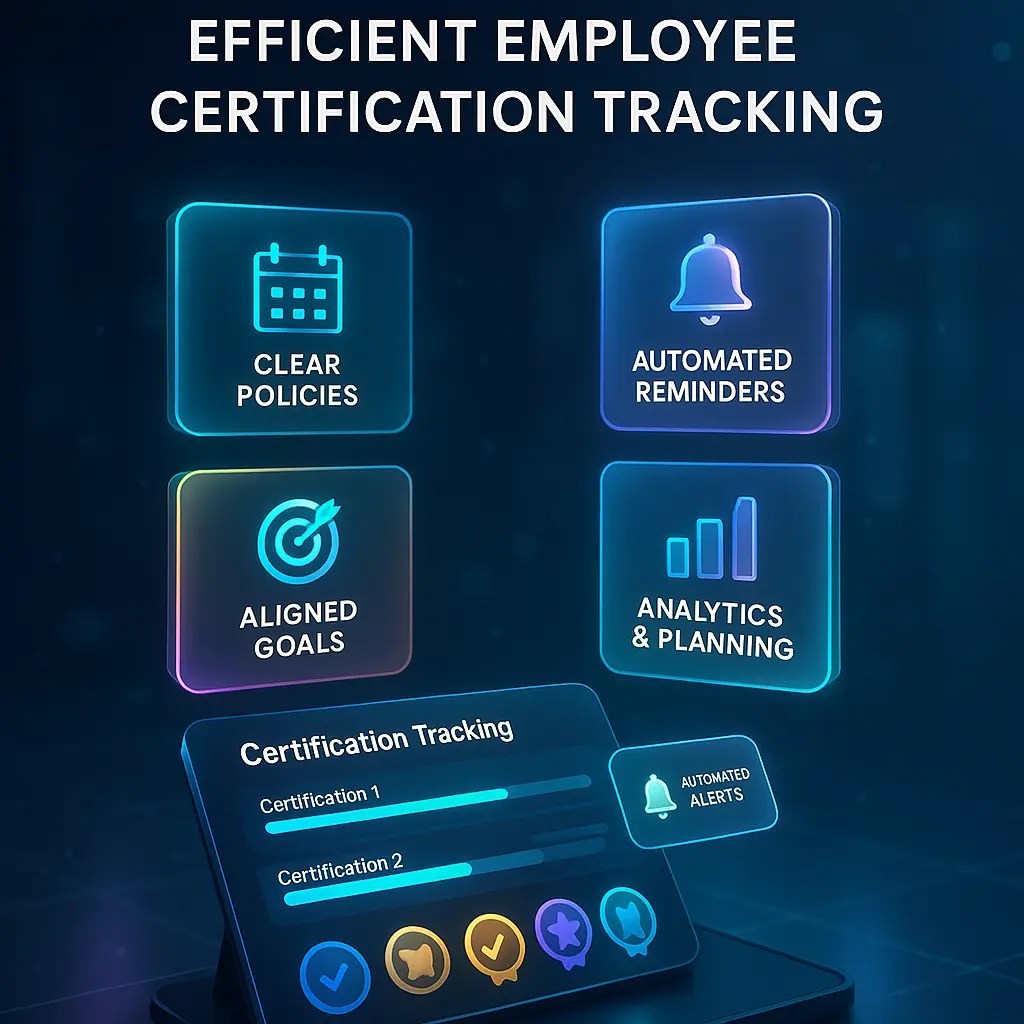
Efficient employee certification tracking goes beyond collecting data-it’s about creating a proactive, transparent system that supports compliance and development simultaneously.
Best practices include:
- Establish clear certification policies and renewal timelines.
- Use automated reminders within your employee certification tracking system to prevent compliance lapses.
- Align certification goals with broader company objectives.
- Leverage LMS analytics to identify skill gaps and plan workforce training.
By embedding employee certification tracking best practices into daily operations, organizations build a culture of accountability, readiness, and continuous improvement.
Conclusion
Employee certification tracking has evolved from a simple recordkeeping task into a cornerstone of compliance, motivation, and professional growth. As industries become more regulated, managing certifications efficiently is critical to maintaining trust and operational safety.
By embracing advanced tools like Advance the Team, HR and compliance leaders can streamline employee certification tracking, prevent lapses, and celebrate employee achievements—all while strengthening organizational credibility and culture.