
1. Introduction
In today’s fast-changing workplace, employee learning faces unprecedented pressure. Traditional training models-static e-learning modules or day-long workshops-often fail to match how employees actually learn. Shrinking attention spans, rising expectations for interactive content, and the need for measurable outcomes make one-off training sessions insufficient.
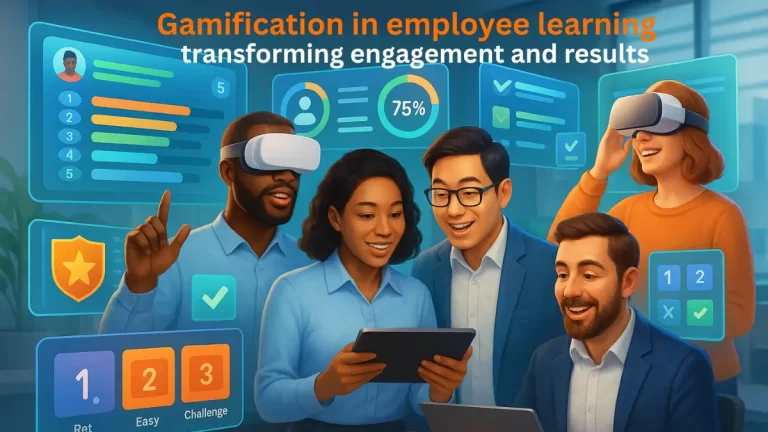
This is where Gamification in Employee Learning comes in. Once a trend in consumer apps, gamification is now transforming corporate learning. When applied thoughtfully, it leverages motivation, curiosity, and reward systems to make learning feel less like a task and more like a shared experience.
Examples in practice
- Leaderboards in sales training boost healthy competition.
- Progress badges in compliance training encourage completion and consistency.
- Organizations adopting gamification report higher completion rates, stronger knowledge retention, and better engagement.
2. Understanding Gamification in Employee Learning
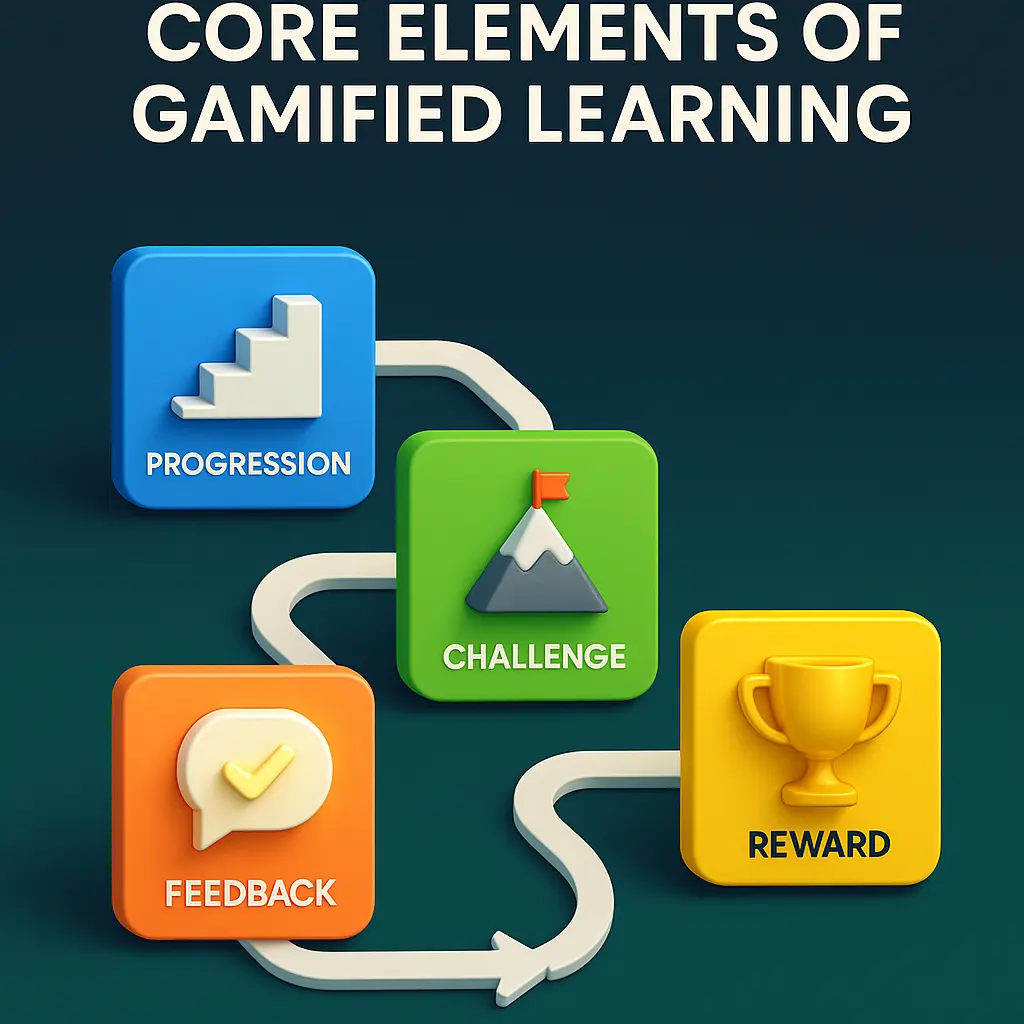
Many misunderstand Gamification in Employee Learning as merely adding points, badges, and leaderboards. True gamification is deeper-it applies game design principles like progression, challenge, feedback, and reward to create immersive, motivating, and performance-driven learning experiences.
Why it works:
- Humans are wired to respond to achievement, recognition, and progress.
- Seeing advancement, unlocking content, or receiving feedback triggers a sense of accomplishment.
- Combines intrinsic motivation (satisfaction from learning) with extrinsic rewards (points, recognition) for sustained engagement.
Trends and Impact:
- Organizations using gamified learning see up to 60% higher course completion rates.
- Scenario-based quests, simulation challenges, and time-bound missions are increasingly common.
Example:
A customer-service team might complete role-play simulations, earning virtual rewards for resolving issues quickly and empathetically. Compliance teams unlock “levels” as they progress, turning mandatory learning into structured challenges.
3.Why Gamification in Employee Learning Works
Gamification moves learning from passive content consumption to active participation, helping employees practice and retain knowledge.
Key benefits:
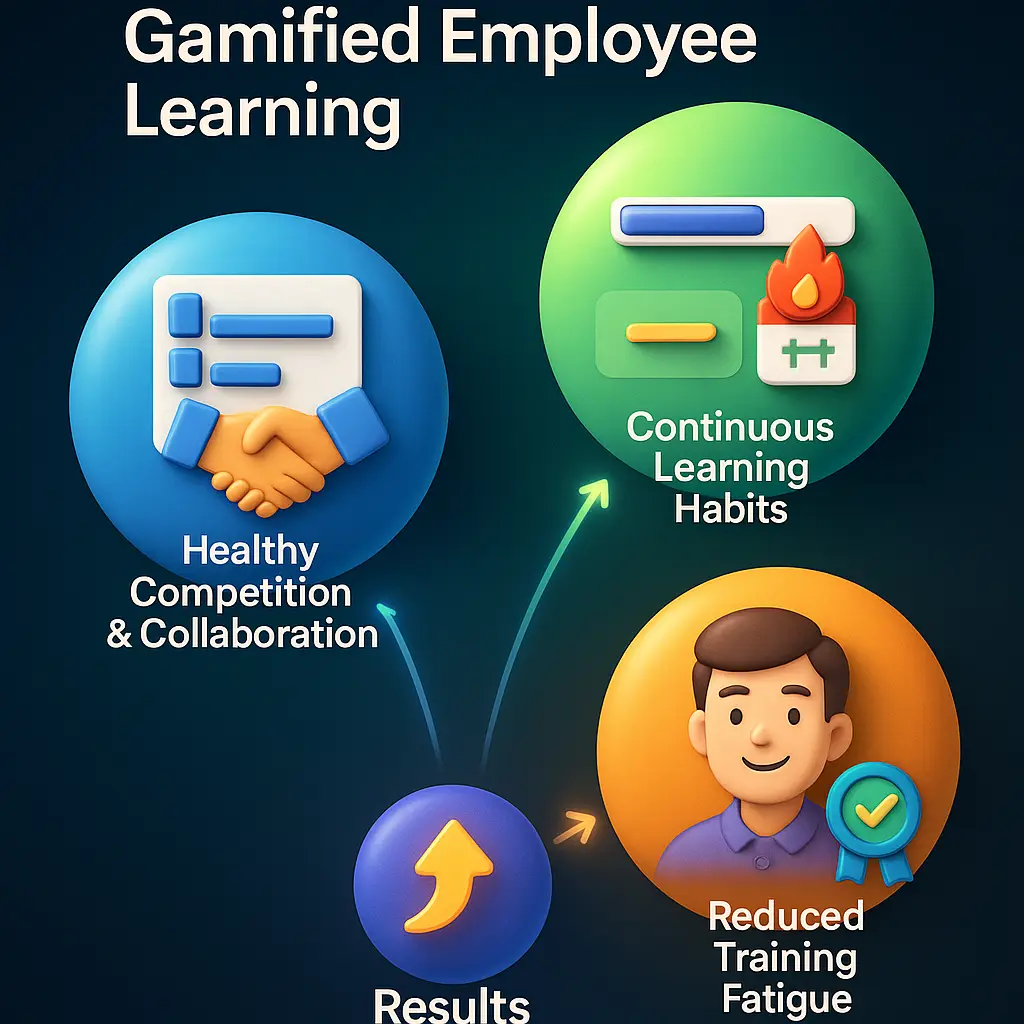
- Healthy competition & collaboration:
- Leaderboards and progress trackers boost achievement.
- Team challenges foster peer learning.
- Continuous learning habits:
- Incremental rewards and levels keep learners engaged over time.
- Reduced training fatigue & drop-off:
- Gamified programs demonstrate higher course completion and better knowledge retention compared to traditional formats.
By making learning interactive, gamification ensurs employees complete training, retain knowledge, and apply it on the job.
4. Case Study: Gamification in Action
Our client adopted Gamification in Employee Learning to address compliance training challenges.
Client: Mid-sized financial services company
Challenge:
- Compliance training completion below 50%
- Monotonous modules with limited knowledge transfer
Solution: Core Gamification Elements
- Progression Systems: Courses redesigned into levels; employees unlock new scenarios after mastering earlier sections.
- Incentives & Recognition:
- Points system feeding into visible leaderboards.
- Digital badges for milestones and achievements.
- Collaboration:
- Team challenges for simulated compliance dilemmas.
- Peer-to-peer discussion forums for collective learning.
Results (3 months post-launch):
- Course completion: 48% → 87%
- Assessment scores: +22% average improvement
- Compliance errors: Fewer mistakes reported
- Learner engagement: Voluntary re-engagement with refresher modules
These outcomes demonstrate how Gamification in Employee Learning drives measurable impact.
Employee feedback:
- “This is the first time compliance training felt interactive.”
- “I actually looked forward to the challenges-especially competing with colleagues in a fun way.”
Business impact:
- Compliance-related incidents: 17% reduction in 6 months
- Improved cost savings and client trust
5. Practical Tips for Implementing Gamification
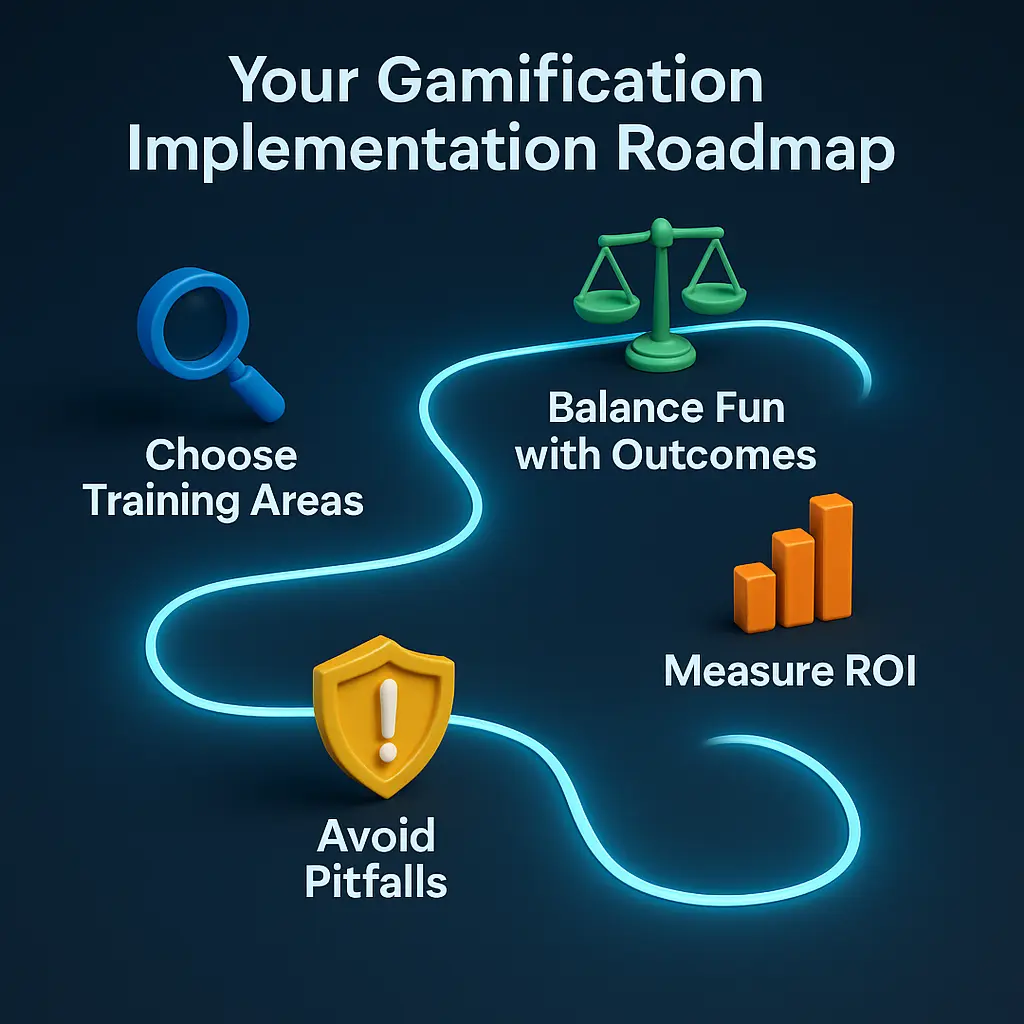
To implement Gamification in Employee Learning effectively, start by choosing the right training areas.
1. Choose the right training areas:
- Best suited for repetition, practice, and problem-solving: sales, onboarding, compliance, customer service.
- Use simulations and scenario-based quests for technical or skill-based programs.
2. Balance fun with outcomes:
- Ensure rewards and challenges reinforce learning objectives.
- Expert tip: Tiered recognition encourages both top performers and consistent improvers.
3. Measure ROI thoughtfully:
- Track knowledge retention, on-the-job performance, and business KPIs (sales growth, error reduction).
4. Avoid common pitfalls:
- Don’t overuse flashy features without aligning them with learning strategy.
- Avoid excessive competition that may demotivate learners.
6. Beyond Points and Badges: The Future of Gamified Learning
The future of Gamification in Employee Learning lies in AI-driven and adaptive experiences.Gamification is evolving beyond points, badges, and leaderboards into adaptive, personalized, and collaborative experiences.
Examples in practice:
- AI & Adaptive Learning: Personalized modules adjusting to individual performance.
- Personalized Learning Journeys: Align skill development, career goals, and competencies.
- Social & Collaborative Gamification: Team quests and peer leaderboards for shared motivation.
- Micro-learning & Mobile-first Design: Bite-sized challenges embedded in daily work routines.
Gamification is becoming a strategic engine for continuous learning, seamlessly integrated into the workplace of tomorrow.
7. Conclusion
Gamification in Employee Learning transforms training from a compliance-driven requirement into an engaging experience.
- Cultivating lasting motivation
- Encouraging collaboration
- Embedding continuous learning habits
For organizations, this means higher engagement, better knowledge retention, and measurable business results. Platforms like Advance the Team provide L&D leaders with tools to design gamified learning experiences that align with organizational goals and culture. By embracing Gamification in Employee Learning, organizations can achieve sustainable growth, stronger employee performance, and a culture of continuous learning.