
Table of Contents
- 1. Introduction
- 2. Challenges Faced by Small Companies in Building a Learning Culture
- 3. Core Elements of a Continuous Learning Culture
- 4. Smart Tools & Platforms That Enable Learning in SMEs
- 5. The Role of Leadership and HR in Promoting Learning
- 6. Measuring the Impact of Learning Initiatives
- 7. Building a Sustainable Learning Mindset
1. Introduction
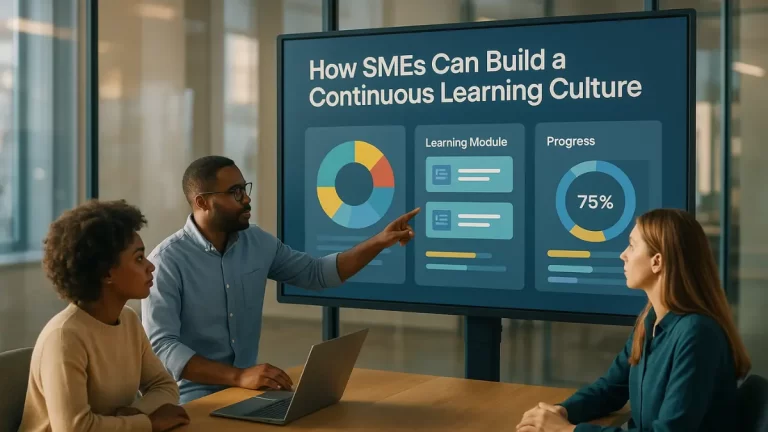
Ever wondered how some small and medium enterprises (SMEs) stay ahead in fast-changing markets while others struggle to keep up? The answer often lies not in technology alone but in people. Cultivating a continuous learning culture in SMEs means creating an environment where every employee is encouraged to learn, improve, and innovate every day. When teams are empowered with ongoing learning opportunities, they become more adaptable, proactive, and motivated to take on new challenges. This shift strengthens a continuous learning culture in SMEs by embedding curiosity, skill development, and knowledge-sharing into the daily rhythm of work, ultimately helping businesses stay competitive and responsive in an ever-evolving landscape.
Unlike one-off training sessions, this mindset focuses on embedding daily learning habits into the workflow. When employees consistently upskill, collaborate, and embrace knowledge-sharing, SMEs unlock new opportunities for growth and long-term competitiveness. By integrating continuous feedback, peer support, and structured learning moments into everyday tasks, organizations strengthen a continuous learning culture in SMEs that supports innovation and adaptability. Over time, this approach not only improves individual capabilities but also reinforces a continuous learning culture in SMEs across the entire team, ensuring skills stay relevant in a fast-changing business environment.
Key Benefits of Fostering Continuous Learning
- Increased adaptability and innovation: Employees respond quickly to market changes with creative solutions.
- Stronger employee engagement: People feel valued when their development is prioritized, reducing turnover.
- Better business resilience: Teams equipped with diverse skills can navigate challenges and uncertainties effectively.
Investing in employee development and upskilling isn’t just a nice-to-have-it’s a strategic move that directly impacts SME growth and long-term business competitiveness.
Yet, building this culture doesn’t come without hurdles. Understanding the challenges SMEs face is the first step toward creating a thriving learning environment.
2. Challenges Faced by Small Companies in Building a Learning Culture
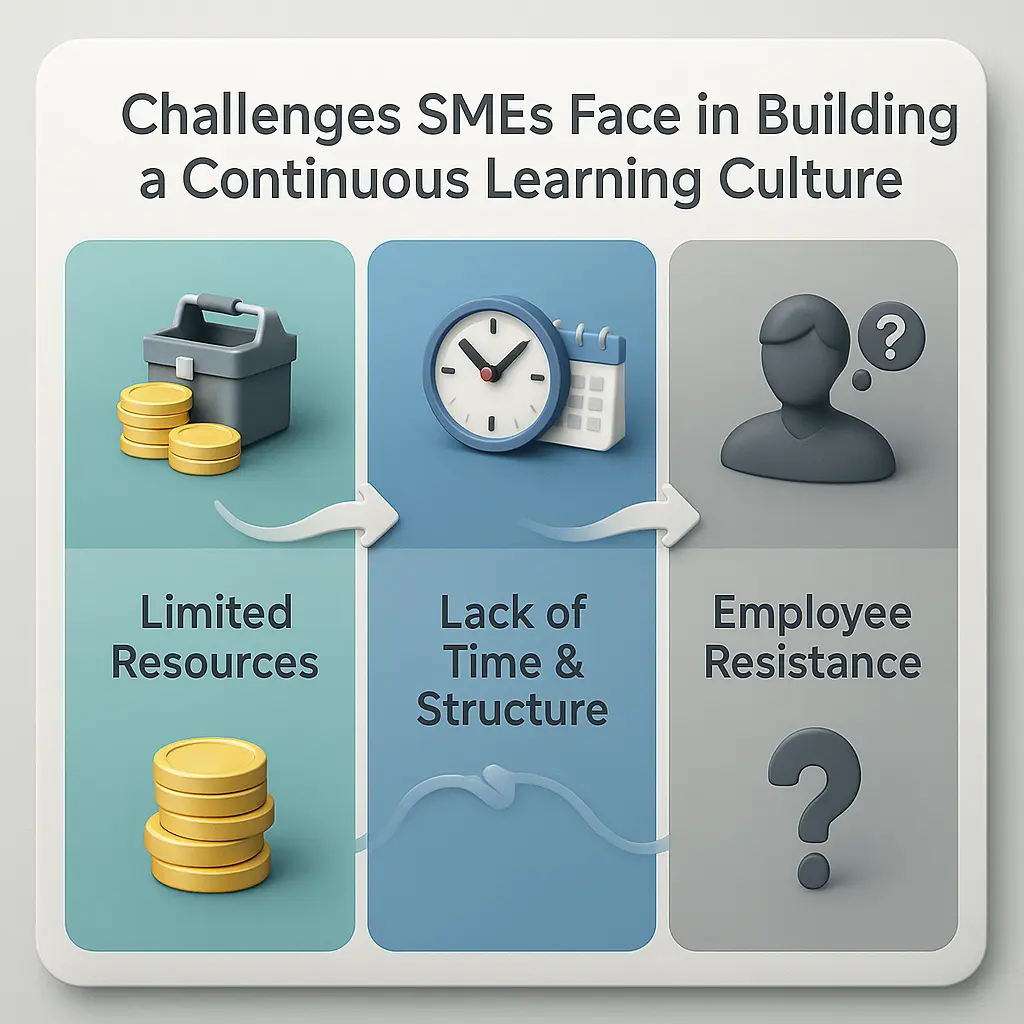
Many small businesses want a continuous learning culture in SMEs but struggle to make it consistent. Despite recognizing the benefits of upskilling and employee development, practical hurdles often slow down progress.
1. Limited Budget and Resources
- The challenge: Learning initiatives often get deprioritized when budgets are tight. SMEs may hesitate to invest in formal training programs.
- Practical tip: Start with microlearning-short, focused modules that require minimal investment. Encourage knowledge-sharing sessions led by internal experts to maximize impact without high costs.
2. Lack of Time and Structured Processes
- The challenge: Small teams juggle multiple roles, leaving little room for dedicated learning. Structured learning processes are often missing.
- Practical tip: Integrate learning into daily workflows. For example, allocate 15–20 minutes per day for skill-building or set up weekly learning huddles. Small, consistent steps build stronger learning habits.
3. Employee Resistance to New Approaches
- The challenge: Change can feel overwhelming. Employees may hesitate to adopt new tools or methods, slowing down employee adoption.
- Practical tip: Leadership should model learning behaviors and identify internal champions to support peers. Making learning relatable and rewarding increases engagement and confidence.
These are some of the most common SME learning barriers, but they are far from insurmountable. By addressing budget limitations, time constraints, and employee resistance with practical solutions, small businesses can gradually overcome these small business learning challenges.
Despite these hurdles, successful SMEs share common learning habits that drive growth, innovation, and resilience.
3. Core Elements of a Continuous Learning Culture
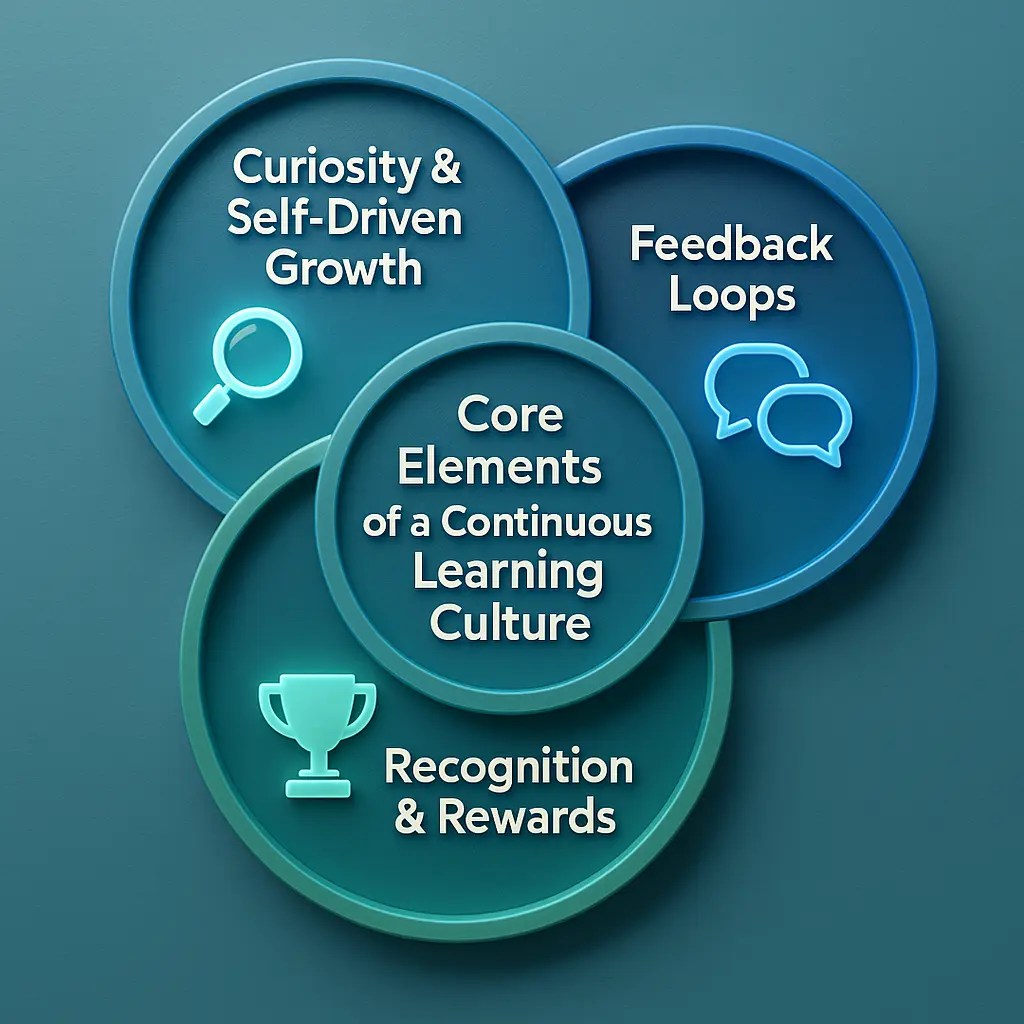
A continuous learning culture in SMEs grows when learning becomes part of daily routines. By embedding curiosity, feedback, and recognition into everyday work, small businesses can foster an environment where employees are motivated to improve and innovate.
1. Encouraging Curiosity and Self-Driven Growth
- Create space for exploration and experimentation, such as allowing employees to dedicate a few hours per month to personal projects or skill-building.
- Promote a growth mindset by sharing learning resources, webinars, and articles relevant to employees’ roles.
- Encourage employees to ask questions and seek new challenges, which fuels creativity and problem-solving.
2. Creating Feedback Loops for Improvement
- Establish regular check-ins where managers provide constructive, actionable feedback.
- Use peer-to-peer feedback to foster collaboration and shared learning across teams.
- Implement feedback-driven learning initiatives, like short reflection sessions after completing projects, so employees identify lessons learned and areas to improve.
3. Recognizing and Rewarding Learning Achievements
- Celebrate learning milestones with shout-outs, certificates, or small rewards, boosting employee motivation.
- Build recognition systems that highlight both individual and team growth efforts, reinforcing a culture of continuous improvement.
- Share success stories internally to inspire others and normalize the practice of lifelong learning.
By consistently integrating curiosity, feedback, and recognition into daily workflows, SMEs can strengthen employee motivation, foster innovation, and build resilient teams. Together, these core elements form the backbone of a continuous learning culture in SMEs, supporting sustainable growth and long-term competitiveness.
4. Smart Tools & Platforms That Enable Learning in SMEs
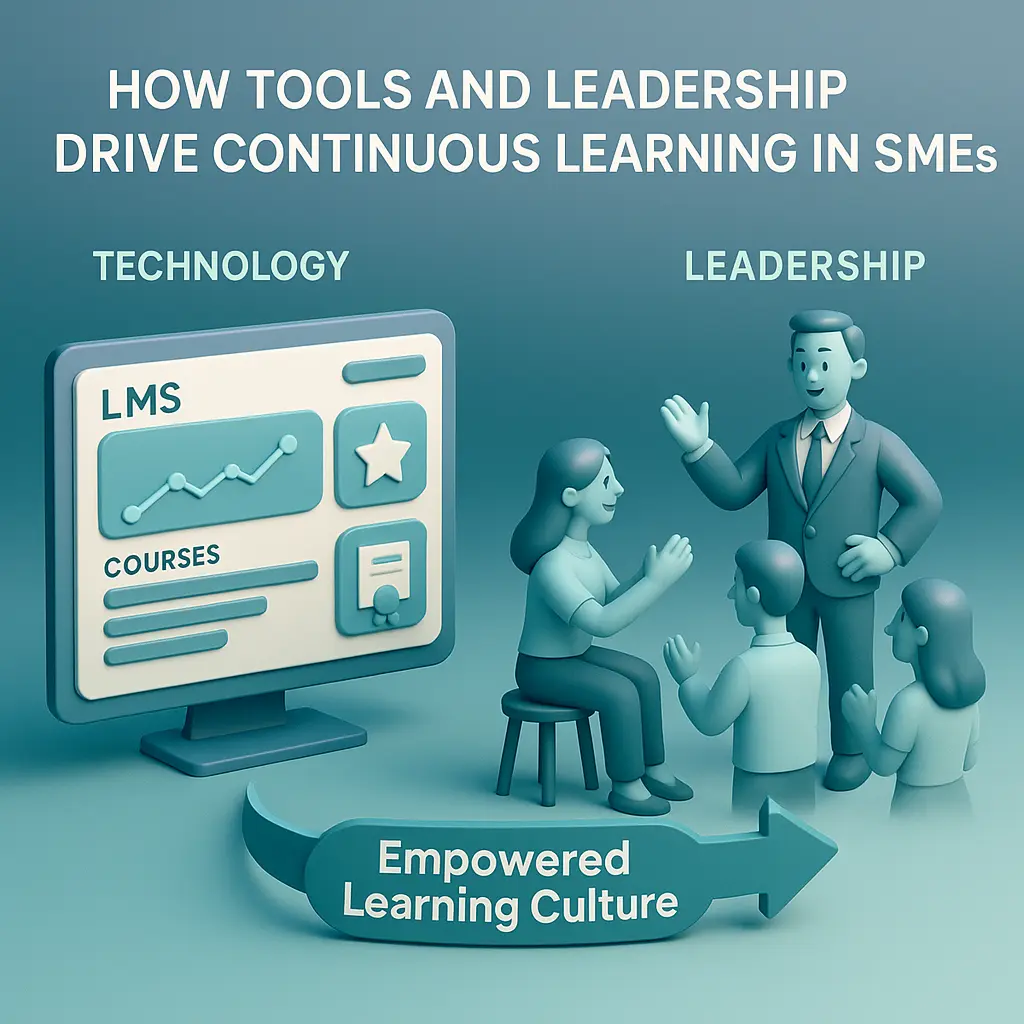
Technology is a key enabler of a continuous learning culture in SMEs, helping teams learn faster, track progress, and apply new skills efficiently. Digital learning tools make it possible for even small teams to access structured training without disrupting daily operations.
1. Role of LMS Platforms in Skill Development
- Centralized learning access: Employees can access courses anytime, anywhere, ensuring consistent knowledge delivery.
- Data-driven skill tracking: Managers can monitor progress, identify skill gaps, and adjust learning paths accordingly.
- Time-saving automation: LMS platforms automate reminders, assessments, and reporting, freeing leaders to focus on coaching and innovation.
2. How Advance the Team Simplifies Course Creation and Learner Tracking
- Easy course design: SMEs can quickly create tailored learning modules without requiring extensive technical expertise.
- Learner progress dashboards: Real-time insights into who has completed courses, enabling targeted follow-ups.
- Engaging learning experience: Gamification and interactive elements encourage employee motivation and participation.
3. Automating Progress Measurement and Certification
- Automated assessments: Quizzes, tests, and assignments are graded instantly, providing immediate feedback.
- Certification generation: Employees receive certificates upon course completion, reinforcing achievement and encouraging further learning.
- Insightful reporting: Leaders can generate analytics to track training ROI and skill improvement across teams.
By leveraging LMS platforms and tools like Advance the Team LMS, SMEs can streamline learning, reduce administrative overhead, and foster a continuous learning culture in SMEs that supports upskilling and long-term competitiveness.
Next, it’s essential to explore how leadership and management behaviors reinforce this learning culture across teams.
5. The Role of Leadership and HR in Promoting Learning
Leadership is the heartbeat of a continuous learning culture in SMEs. Without visible commitment from leaders and HR, even the best learning tools may not achieve lasting impact.
Key Actions Leaders and HR Can Take:
- Build learning roadmaps aligned with company goals: Define clear objectives for skill development that directly support business strategy.
- Leverage LMS insights to identify skill gaps: Tools like Advance the Team LMS provide analytics to pinpoint where employees need development and track progress over time.
- Set measurable learning targets: Encourage teams to complete courses, participate in workshops, or engage in microlearning modules.
- Recognize and reward consistent learners: Celebrate achievements publicly through shout-outs, certificates, or incentives to boost motivation.
- Encourage coaching and mentorship: Leaders who model learning behavior and provide guidance inspire employees to adopt a growth mindset.
By combining structured learning roadmaps, data-driven monitoring, and consistent recognition, leaders and HR teams can transform employee engagement into tangible skill development.
Commitment from the top ensures that learning is not a one-time event but a sustained, daily practice, reinforcing a continuous learning culture in SMEs that empowers employees, strengthens team capabilities, and drives long-term business growth.
6. Measuring the Impact of Learning Initiatives
A continuous learning culture in SMEs succeeds only when learning outcomes are measurable. Without tracking results, even well-designed programs may fail to show real value.
Key Metrics to Track:
- Course participation and completion rates: Monitor how many employees start and finish training modules to gauge engagement.
- Skill acquisition and certifications: Track new competencies gained and certifications earned to measure tangible learning outcomes.
- On-the-job performance post-training: Evaluate how employees apply new skills in daily work to assess practical impact.
Analyzing Employee Improvement Over Time:
- Use learning analytics dashboards to visualize trends in skill growth and course completion.
- Compare pre-training and post-training performance metrics to identify areas of improvement and remaining gaps.
- Segment data by team, role, or individual to tailor future training initiatives and maximize ROI.
Digital tools simplify this process significantly. Platforms like LMS for SMEs centralize data, automate reporting, and provide SME skill tracking, making it easy to see which learning efforts drive meaningful results. Leaders can use this insight to refine programs, reinforce successful practices, and allocate resources efficiently-all of which strengthens a continuous learning culture in SMEs.
When SMEs consistently track participation, skill growth, and performance improvement, they gain actionable insights. This turns learning from a soft initiative into a measurable business strategy, ensuring a continuous learning culture in SMEs contributes directly to growth, adaptability, and long-term competitiveness.
7. Building a Sustainable Learning Mindset
Creating a lasting continuous learning culture in SMEs takes consistency and shared responsibility. Long-term success depends on embedding learning into everyday practices, making it a natural part of how teams operate.
Strategies to Sustain Learning:
- Encourage Peer Learning Groups
- Form small groups where employees share insights, solve challenges together, and exchange feedback.
- Rotate topics regularly to keep discussions fresh and relevant.
- Peer learning fosters collaboration, knowledge sharing, and reinforces a growth mindset across the team.
- Mentorship Programs
- Pair experienced employees with newer team members to guide skill development and career growth.
- Mentors provide practical advice, support learning goals, and help build confidence.
- Mentorship reinforces accountability and accelerates ongoing learning within SMEs.
- Reflective Learning Habits
- Encourage employees to reflect on lessons learned after projects or training sessions.
- Maintain simple journals or discussion boards to track progress and insights.
- Reflection ensures that knowledge is applied effectively and becomes part of daily decision-making.
- Leverage Technology for Continuous Support
- Platforms like Advance the Team help SMEs track learning progress, assign new courses, and celebrate milestones.
- Automated dashboards and reminders ensure employees stay engaged and learning remains consistent.
- Data-driven insights help managers identify gaps and plan future learning initiatives efficiently.
- Create Accountability and Growth Culture
- Set clear expectations for learning goals at individual and team levels.
- Celebrate achievements publicly to reinforce positive behavior and motivation.
- Accountability ensures that learning becomes a shared responsibility and part of organizational DNA.
By combining peer learning, mentorship, reflective practices, and supportive technology, SMEs can cultivate a continuous learning culture in SMEs that is resilient and self-sustaining. Over time, learning becomes more than just an initiative-it becomes a core part of the company’s identity, driving innovation, adaptability, and long-term success.
A thriving continuous learning culture in SMEs ensures employees are empowered, motivated, and prepared to take the business forward in a competitive landscape.
Conclusion: From Training to Transformation
A continuous learning culture in SMEs transforms traditional training into a strategic advantage.
By integrating learning into everyday workflows, small and medium enterprises can boost innovation, adaptability, and long-term growth. Platforms like Advance the Team empower businesses to make this transformation seamless—helping track employee progress, automate skill development, and sustain engagement across teams.
With the right blend of technology, leadership, and mindset, SMEs can turn daily learning into lasting business impact.