
Table of Contents
- 1. Introduction
- 2. The Hidden Costs of Poor Onboarding
- 3. Building the Foundation-What an Effective Onboarding Strategy Looks Like
- 4. Technology’s Role in Streamlining Onboarding Processes
- 5. How Advance the Team Transforms Onboarding Efficiency
- 6. Driving Engagement and Retention Through Interactive Learning
- 7. Measuring Onboarding Success-Metrics That Matter
- 8. Creating a Continuous Learning Culture Beyond Day One
1. Introduction
A smooth onboarding experience is more than just a well-organized first week-it’s the foundation for long-term employee success. In today’s fast-moving, talent-driven business landscape, onboarding directly shapes how quickly employees adapt, how engaged they feel, and how long they stay with the company. When organizations treat onboarding as a strategic function rather than an administrative step, they see measurable gains in both productivity and retention.
Onboarding as a Driver of Performance and Retention
The first 90 days set the tone for an employee’s entire journey. Clear expectations, structured learning, and consistent communication help new hires build confidence and competence faster. According to the Brandon Hall Group, companies with a strong onboarding process improve new hire retention by 82% and boost productivity by over 70%.
Additional Insights Reinforce Its Impact:
- SHRM reports that one in three new employees leaves within six months due to ineffective onboarding.
- Glassdoor found that effective onboarding increases employee engagement and role clarity, leading to significantly higher job satisfaction.
These numbers highlight that a smooth onboarding experience is not just an HR goal-it’s a measurable performance strategy.
Redefining Smooth Onboarding in 2025’s Hybrid Workplace
In 2025, a smooth onboarding experience looks very different from the past. With hybrid and remote work becoming the norm, the focus has shifted to building digital-first, flexible, and inclusive onboarding environments. It’s about ensuring every employee-whether remote or in-office-feels connected, informed, and supported from day one.
A Future-Ready Onboarding Process Includes:
- Seamless integration of digital tools and communication platforms to reduce friction.
- Personalized learning paths that help employees ramp up faster based on their role and skills.
- Consistent cultural immersion, even for distributed teams, through video introductions, mentorship, and LMS-driven engagement.
- Data-backed insights to monitor progress, identify skill gaps, and enhance experience quality.
Organizations leveraging intelligent learning management systems like Advance the Team can automate training, track engagement, and deliver personalized learning at scale-turning onboarding into a continuous growth experience rather than a one-time event.
2. The Hidden Costs of Poor Onboarding
When onboarding is poorly executed, the business impact is both immediate and long-lasting. Many organizations underestimate how early inefficiencies can cascade into disengagement, low productivity, and higher turnover-all of which directly affect profitability. A smooth onboarding experience isn’t just about better employee morale; it’s about preventing the costly ripple effects of disorganization and missed opportunities.
Common Issues with Ineffective Onboarding
Poor onboarding often leads to a breakdown in clarity, connection, and confidence-three pillars essential for new hire success. The most common problems include:
- Early Disengagement: Employees feel disconnected from the company’s mission and values.
- Delayed Productivity: Without structured training, new hires take longer to reach full performance capacity.
- High Turnover: Lack of support during the first 90 days increases the likelihood of early attrition.
- Manager Overload: Supervisors spend unnecessary time guiding new hires through tasks that could be automated or standardized.
- Compliance Risks: Inconsistent onboarding leads to missed documentation, policy gaps, and training deficiencies.
The Real Cost of Poor Onboarding
The financial burden of poor onboarding is substantial-and often hidden within broader HR and operational metrics. Consider these data-driven insights:
- Replacing an employee can cost up to 30% of their annual salary (U.S. Department of Labor).
- Organizations with weak onboarding programs experience 50% higher new hire turnover (UrbanBound).
- It takes 8–12 months for a new hire to reach full productivity without structured onboarding (Gallup).
- Businesses lose an average of $11,000 per employee annually due to unproductive onboarding processes (Aberdeen Group).
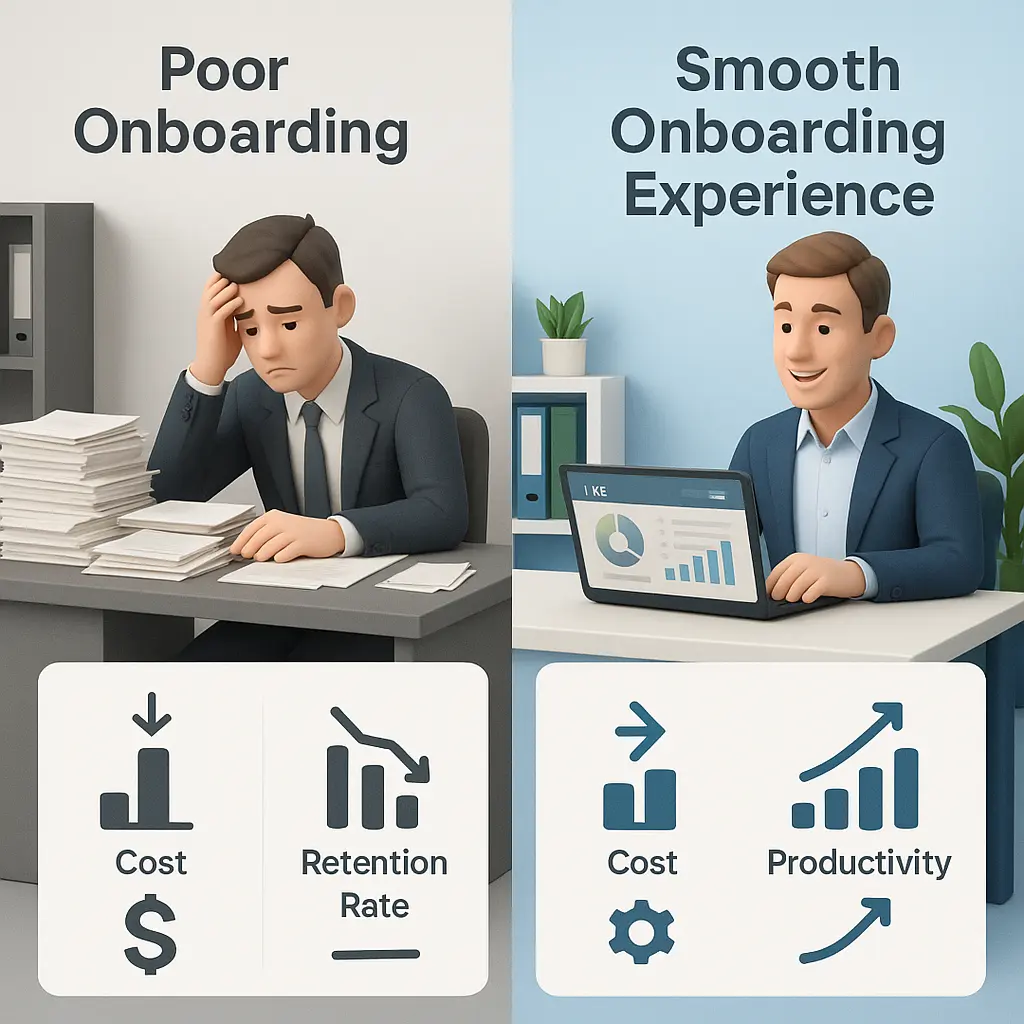
In contrast, a smooth onboarding experience significantly reduces these losses by accelerating time-to-productivity and improving retention rates.
Poor vs Smooth Onboarding Experience
| Factor | Poor Onboarding Experience | Smooth Onboarding Experience |
|---|---|---|
| Time to Productivity | 8–12 months before reaching full efficiency | 4–6 months with guided training and automation |
| First-Year Retention | ~60% of employees stay | 85–90% of employees stay |
| Employee Engagement | Low engagement and unclear expectations | High engagement through clarity and connection |
| Training Costs | High due to manual, repetitive processes | Lower through automation and centralized LMS |
| Manager Time Investment | 25–30% of time spent on repetitive onboarding tasks | 10–15% with automated systems and self-paced learning |
| Overall ROI | Negative due to turnover and delays | Positive due to faster ramp-up and sustained productivity |
The ROI Link: Structured Onboarding and HR Performance
Structured onboarding is not just about organization-it’s a measurable driver of HR efficiency and workforce ROI.
- Companies with standardized onboarding see 54% greater new hire productivity (SHRM).
- HR teams report 20–25% reduction in administrative workload through onboarding automation.
- Better onboarding correlates with stronger employer branding and reduced recruitment costs.
When HR leaders invest in data-driven, LMS-supported onboarding systems, they not only improve new hire success but also enhance the overall performance of the HR function.
3. Building the Foundation-What an Effective Onboarding Strategy Looks Like
A smooth onboarding experience doesn’t happen by chance-it’s the result of a structured, well-aligned strategy that connects people, culture, and performance. Effective onboarding bridges the gap between hiring and long-term contribution, ensuring every employee understands their role, feels part of the organization, and has the skills and support to succeed.
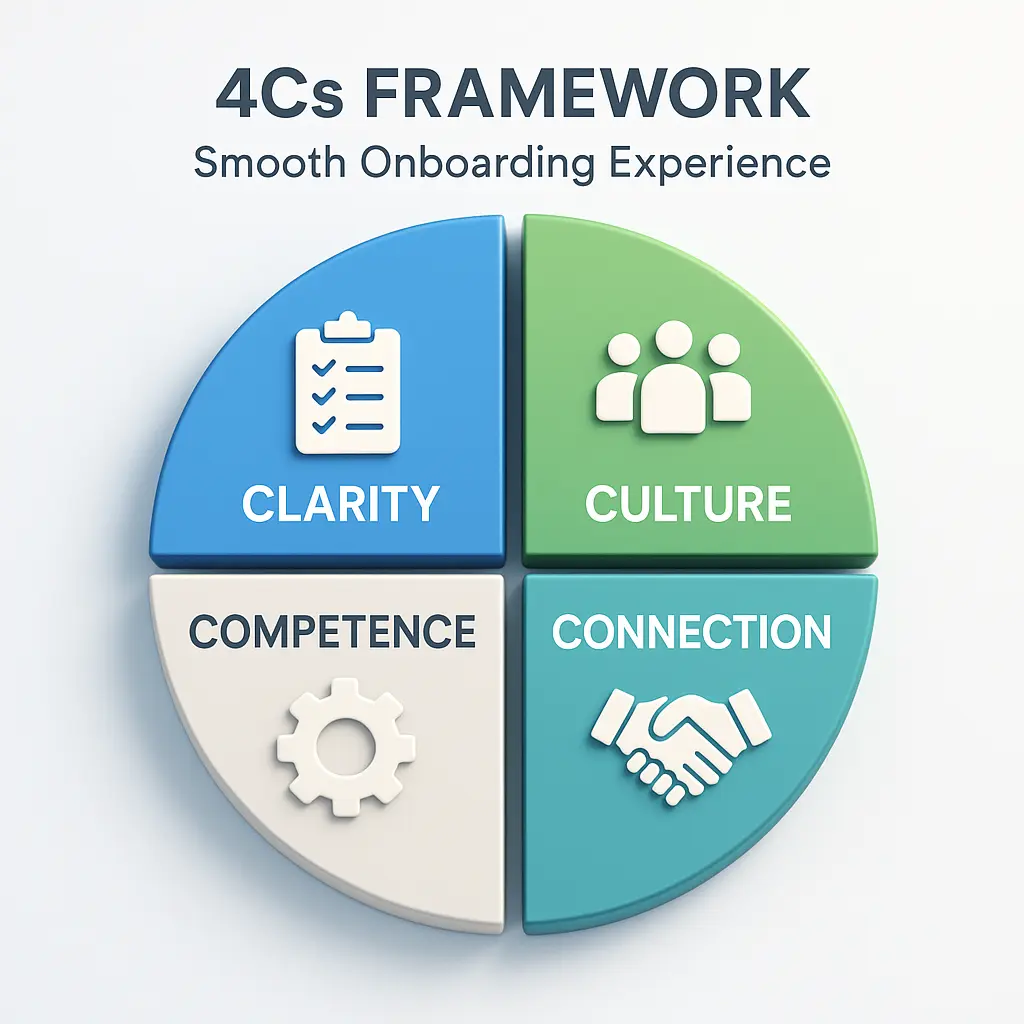
At its core, a successful onboarding framework rests on four foundational pillars-the 4Cs: Clarity, Culture, Connection, and Competence.
The 4 Pillars of an Effective Onboarding Strategy
| Pillar (4Cs Framework) | Definition | How It Supports a Smooth Onboarding Experience |
|---|---|---|
| Clarity | Clear communication of role expectations, goals, and success metrics. | Prevents confusion, reduces performance anxiety, and accelerates new hire confidence. |
| Culture | Immersing employees in organizational values, mission, and behaviors. | Builds early engagement and alignment with company identity. |
| Connection | Establishing relationships with peers, mentors, and leaders. | Strengthens collaboration, belonging, and long-term retention. |
| Competence | Equipping employees with the skills, tools, and resources to perform effectively. | Ensures faster time-to-productivity and consistent role mastery. |
These four dimensions work together to turn onboarding into a smooth onboarding experience that not only welcomes employees but actively empowers them to perform from day one.
Aligning Onboarding with Organizational Goals
The most successful HR teams design onboarding programs that reflect the company’s broader strategic objectives.
- Performance alignment: Onboarding introduces KPIs, workflows, and success metrics that link directly to departmental goals.
- Cultural integration: Early exposure to company values reinforces the behaviors that drive long-term success.
- Skill acceleration: Targeted learning modules and microtraining help new hires contribute to priority projects faster.
- Retention strategy: Continuous feedback loops and mentorship programs turn onboarding into an engagement driver.
By tying onboarding outcomes to business metrics like productivity, retention, and engagement, HR leaders can demonstrate measurable ROI and strategic value to the organization.
Moving from Manual Checklists to Experience-Driven Onboarding
Traditional onboarding often relies on checklists and paperwork that feel transactional rather than transformative. Modern HR strategies replace these outdated methods with experience-driven onboarding powered by technology and personalization.
Key shifts include:
- Automation: Replacing manual orientation tasks with digital workflows.
- Personalization: Delivering tailored learning paths and onboarding journeys by role or department.
- Analytics: Using real-time data to measure engagement, completion rates, and performance progress.
- Integration: Connecting onboarding with learning management systems, performance tools, and communication platforms for a seamless employee experience.
This transformation not only streamlines HR processes but also elevates the employee experience-setting the stage for stronger engagement, faster productivity, and long-term retention.
4. Technology’s Role in Streamlining Onboarding Processes
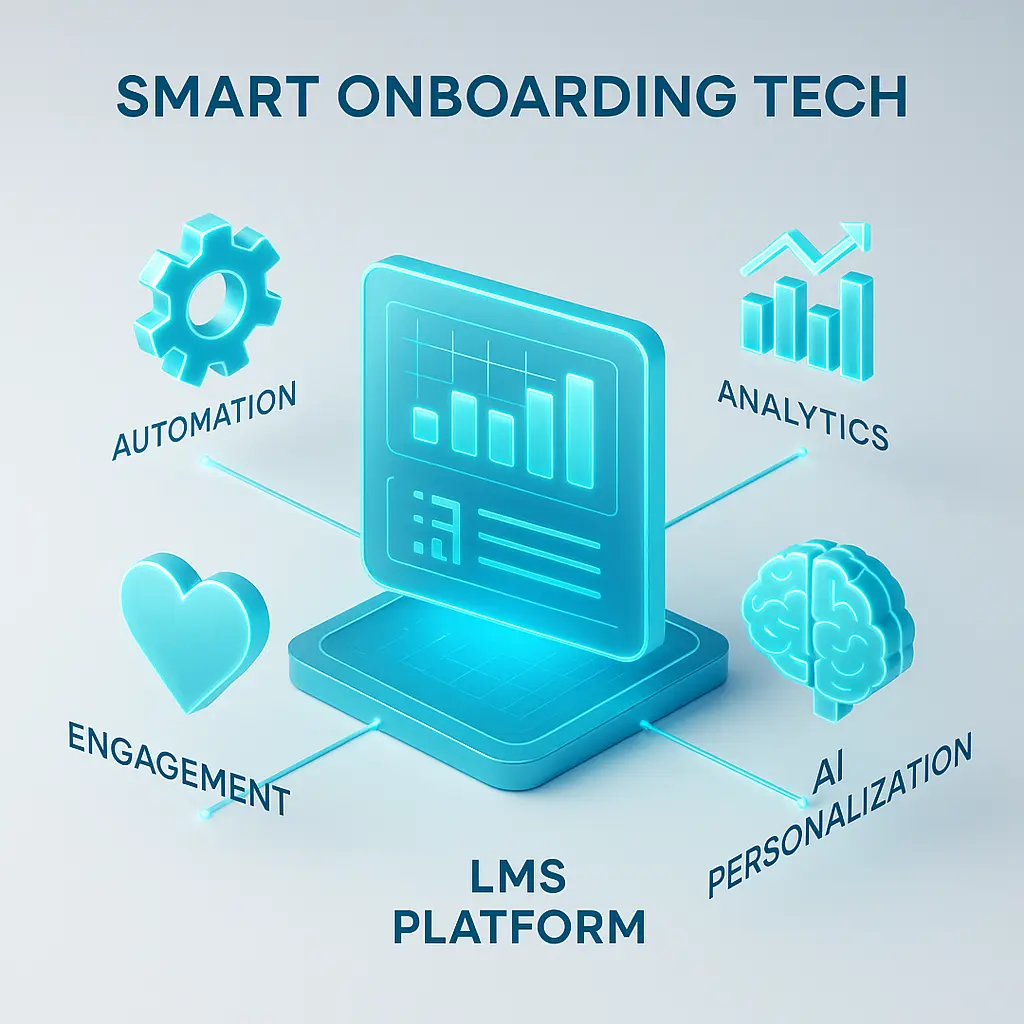
The modern workforce demands efficiency, personalization, and measurable outcomes-and that’s where technology transforms onboarding from a manual HR task into a strategic growth enabler. A smooth onboarding experience today depends heavily on how effectively technology simplifies operations, automates workflows, and delivers real-time insights into new hire progress.
Forward-thinking organizations are shifting from traditional, paper-heavy processes to tech-enabled onboarding systems that empower HR teams, enhance employee engagement, and accelerate time-to-productivity.
From Traditional to Tech-Enabled Onboarding Workflows
Legacy onboarding relied on manual paperwork, disjointed communication, and inconsistent follow-ups. This not only slowed down new hire readiness but also burdened HR with repetitive administrative work. Technology now redefines this landscape by creating integrated, automated, and data-backed onboarding ecosystems.
Key transformations include:
- Centralized digital platforms: Consolidating all onboarding materials, forms, and training modules in one place.
- Automated workflows: Triggering welcome emails, policy acknowledgments, and training assignments automatically.
- Personalized learning paths: Using role-based onboarding journeys that adapt to individual needs and job functions.
- Remote readiness: Seamless digital onboarding for hybrid and remote teams through cloud-based access.
- Data visibility: Real-time analytics to monitor engagement, completion rates, and performance outcomes.
This shift ensures every new hire experiences consistency, clarity, and empowerment-the foundation of a smooth onboarding experience in the digital era.
Before vs After Tech Adoption
| Onboarding Aspect | Before (Manual Processes) | After (Tech-Enabled Onboarding) |
|---|---|---|
| Time-to-Productivity | 10–12 weeks for new hires to reach efficiency | 4–6 weeks with automated learning workflows |
| Engagement Rate | 55–60% average engagement due to inconsistent communication | 85–90% engagement through interactive, LMS-driven modules |
| Training Completion | Low completion rates with manual tracking | 95%+ completion through automated notifications and progress dashboards |
| Administrative Load | High HR effort in paperwork and follow-ups | 40–50% reduction via automation and self-service onboarding portals |
| Compliance Accuracy | Manual errors and missing documents | 100% compliance through digital policy acknowledgments and recordkeeping |
Automation and Analytics: The Core of Modern Onboarding
Automation reduces repetitive workload while analytics provide visibility into what’s working-and what’s not. Together, they transform onboarding from a process of guesswork to one of continuous improvement.
- Automation streamlines repetitive HR tasks, ensuring consistency and freeing up time for high-impact engagement.
- Analytics deliver measurable insights on training completion, new hire engagement, and skill readiness.
- Predictive data helps HR teams anticipate drop-off points and proactively address engagement gaps.
The ROI of LMS-Driven Training and Compliance Tracking
Learning Management Systems (LMS) have become the backbone of modern onboarding. They not only organize and automate training but also track compliance, measure engagement, and generate ROI-driven insights.
Key ROI outcomes include:
- Faster ramp-up times: Employees reach full productivity up to 40% sooner.
- Reduced compliance risk: Automated policy training ensures 100% completion and documentation.
- Improved engagement: Interactive modules and progress tracking drive higher participation.
- Data-backed decision-making: HR leaders can correlate onboarding success with long-term performance and retention.
Technology doesn’t just make onboarding easier-it makes it measurable, repeatable, and scalable.
5. How Advance the Team Transforms Onboarding Efficiency
In the era of digital transformation, HR teams are under pressure to deliver faster, smarter, and more consistent onboarding experiences-without increasing administrative overhead. This is where Advance the Team, a next-generation Learning Management System (LMS), steps in as a game-changer. Designed specifically for modern HR operations, it enables organizations to automate onboarding tasks, personalize training journeys, and track progress in real time-all while ensuring a smooth onboarding experience for every new hire.
Unlike traditional onboarding tools, Advance the Team focuses on creating seamless, data-driven learning paths that accelerate productivity and strengthen engagement from day one. By combining automation, analytics, and personalization, it empowers HR leaders to turn onboarding into a measurable strategic advantage rather than a manual process.
Key Features Driving Onboarding Efficiency
- Automation at Scale: Automatically assign courses, send reminders, and trigger learning milestones — minimizing HR’s manual workload.
- Real-Time Tracking: Monitor completion rates, engagement levels, and compliance metrics through visual dashboards.
- Personalized Learning Paths: Deliver content based on employee role, department, or learning style to ensure relevance and retention.
- Integrated Analytics: Correlate onboarding performance with productivity and retention metrics for data-driven decision-making.
- Consistent Experience: Standardize onboarding across locations, ensuring that remote, hybrid, and in-office employees all receive a unified introduction.
These features enable HR teams to streamline complex processes, enhance the employee experience, and achieve a smooth onboarding experience that’s consistent, measurable, and scalable across the organization.
How Advance the Team Delivers a Smooth Onboarding Experience
| Feature | Benefit | Measured Impact |
|---|---|---|
| Automated Course Assignments | Eliminates manual setup, ensuring every new hire receives the right training modules instantly. | Saves HR teams up to 40% of administrative time. |
| Progress & Performance Tracking | Visual dashboards show completion rates, engagement trends, and skill progression. | Improves onboarding visibility and accountability. |
| Personalized Learning Journeys | Tailors content based on job role, skill level, and learning speed. | Reduces time-to-productivity by 35–40%. |
| Compliance Automation | Automatically schedules and verifies completion of compliance modules. | Achieves 100% policy adherence with digital tracking. |
| Interactive Learning Tools | Gamified content, quizzes, and feedback loops enhance engagement. | Boosts learner engagement rates up to 90%. |
| Analytics & Insights Dashboard | Provides HR leaders with actionable data to refine onboarding programs. | Enables data-backed improvement of onboarding strategies. |
Driving Measurable Outcomes
With Advance the Team, HR departments gain full visibility into the onboarding lifecycle-from new hire engagement to long-term retention. The platform’s built-in analytics empower leaders to track critical metrics such as:
- Time-to-productivity: How quickly employees reach operational readiness.
- Training completion and compliance rates: Indicators of program effectiveness.
- Engagement scores: Insights into how well new hires connect with the learning experience.
- Retention correlation: Data linking onboarding quality to employee tenure.
Ultimately, Advance the Team transforms onboarding from a logistical challenge into a strategic performance driver-ensuring every employee’s first impression becomes a lasting advantage.
6. Driving Engagement and Retention Through Interactive Learning
Even the most well-structured onboarding program can fall short if it fails to engage employees meaningfully. One of the biggest challenges HR and L&D leaders face today is ensuring that new hires remain active participants, not passive observers, during their learning journey. Engagement is the bridge between information and application-and without it, a smooth onboarding experience quickly loses its impact.
Modern employees, especially digital-native professionals, expect onboarding to be interactive, intuitive, and personalized. Traditional slides and static videos no longer capture attention or drive retention. Instead, organizations must adopt learning strategies that inspire curiosity, foster collaboration, and encourage real-time feedback.
Common Engagement Challenges in Onboarding
- Information Overload: Too much content presented too quickly leads to disengagement and confusion.
- One-Size-Fits-All Learning: Generic onboarding fails to meet diverse role-specific needs.
- Lack of Interaction: Minimal feedback opportunities make new hires feel disconnected.
- Delayed Feedback: Without timely input, employees struggle to gauge their progress or performance.
These challenges not only delay productivity but also erode motivation and long-term commitment.
Interactive Learning: The Key to Sustained Engagement
Interactive learning techniques transform onboarding from a checklist into an experience. By applying gamification, microlearning, and continuous feedback, HR teams can boost engagement and retention significantly.
- Gamification: Integrates badges, points, and challenges that motivate participation and reinforce learning milestones.
- Microlearning: Delivers short, focused lessons that are easier to absorb and apply, helping employees retain knowledge effectively.
- Feedback Loops: Real-time feedback and quizzes allow learners to track progress, identify gaps, and stay motivated.
- Peer Interaction: Collaborative exercises and discussion boards build early connections among new hires.
Together, these elements create an onboarding experience that’s not only efficient but also emotionally engaging-a cornerstone of a smooth onboarding experience in today’s workforce.
How Advance the Team Powers Interactive Learning
Advance the Team integrates engagement-driven learning directly into the onboarding process. Its built-in modules are designed to make learning dynamic, measurable, and rewarding.
Key capabilities include:
- Gamified Learning Paths: New hires earn rewards for completing modules, fostering motivation and healthy competition.
- Bite-Sized Microlearning Content: Lessons are delivered in digestible chunks that support faster comprehension and retention.
- Integrated Feedback Systems: Learners receive instant performance feedback and guidance from managers or mentors.
- Interactive Dashboards: Employees can visualize their progress, while HR teams gain insight into engagement metrics and learning outcomes.
By turning onboarding into an engaging learning experience, Advance the Team helps organizations not only accelerate productivity but also strengthen long-term employee loyalty.
7. Measuring Onboarding Success-Metrics That Matter
A smooth onboarding experience is only as effective as the results it delivers. For HR leaders and business decision-makers, measuring onboarding success goes beyond tracking completion rates-it’s about understanding how effectively new hires integrate, perform, and stay. By focusing on data-driven metrics, organizations can transform onboarding from a qualitative initiative into a measurable performance driver that aligns directly with business goals.
Key KPIs That Define Onboarding Success
The following key performance indicators (KPIs) provide a comprehensive view of onboarding effectiveness and its impact on workforce performance:
- Time-to-Productivity: Measures how quickly new hires reach full performance levels in their roles. A shorter ramp-up time indicates better onboarding efficiency.
- Retention Rate (First-Year): Tracks how many employees remain with the organization after one year-a strong reflection of onboarding quality.
- Training Completion Rate: Evaluates how consistently new hires finish assigned learning modules, policies, and compliance requirements.
- Employee Satisfaction: Gathers feedback on the overall onboarding journey, including clarity, communication, and support.
- Manager Feedback Scores: Measures how prepared new hires are to perform independently, as assessed by their direct supervisors.
- Engagement Metrics: Monitors participation in onboarding activities, discussion forums, and learning assessments.
By analyzing these metrics holistically, HR teams can identify strengths, address bottlenecks, and continuously refine the onboarding process.
How Analytics Dashboards Drive Better HR Decisions
Modern onboarding platforms, such as Advance the Team, provide real-time analytics dashboards that consolidate all key onboarding metrics into one unified view. This enables HR professionals to move from reactive to predictive decision-making.
Key benefits include:
- Data Transparency: Centralized dashboards allow HR teams to track completion, progress, and performance in real time.
- Predictive Insights: Identify early signs of disengagement or attrition risk before they impact retention.
- Continuous Optimization: Use trend data to refine onboarding programs, learning paths, and engagement tactics.
- Benchmarking: Compare onboarding effectiveness across departments, roles, or locations to identify best practices.
Data visualization transforms complex onboarding data into actionable intelligence-empowering HR to make informed, evidence-based improvements.
LMS Data Visualization and ROI Measurement
An LMS-driven onboarding ecosystem like Advance the Team not only captures data but also visualizes it in a way that demonstrates tangible ROI.
- Productivity Dashboards: Show how onboarding reduces time-to-productivity and enhances skill readiness.
- Engagement Heatmaps: Highlight which modules drive the most participation and which need improvement.
- Compliance Reports: Automatically generate completion and policy adherence summaries for audits.
- ROI Tracking: Quantify onboarding impact through metrics such as cost per hire, retention improvement, and efficiency gains.
Ultimately, analytics validate that a smooth onboarding experience isn’t just a positive employee initiative-it’s a strategic investment that delivers measurable returns in performance, engagement, and organizational growth.
8. Creating a Continuous Learning Culture Beyond Day One
A smooth onboarding experience is just the beginning of an employee’s learning journey. True organizational success comes from extending that momentum into a culture of continuous learning-one where development doesn’t stop after the first week but evolves with each stage of the employee lifecycle. When onboarding seamlessly transitions into long-term growth, it drives engagement, innovation, and business agility.
Extending Onboarding into Ongoing Learning
Traditional onboarding often ends once new hires complete compliance and introductory training. However, high-performing organizations now view onboarding as a launchpad for continuous learning.
Key strategies include:
- Role-Specific Learning Paths: Extend onboarding with advanced modules that align to evolving job responsibilities.
- Performance-Linked Development: Integrate skill-building milestones tied to performance goals and career progression.
- Mentorship & Coaching: Pair new hires with experienced mentors to maintain learning momentum beyond initial training.
- Learning Communities: Foster peer-based learning through discussion forums, internal webinars, and collaborative projects.
By nurturing learning continuity, organizations ensure that every employee remains aligned, capable, and motivated long after day one.
Business Impact of Linking Onboarding to Long-Term Development
When a smooth onboarding experience connects directly to ongoing learning, businesses gain measurable advantages that extend far beyond early productivity:
- Higher Employee Retention: Continuous learning builds a sense of growth and belonging, reducing turnover.
- Increased Innovation: Ongoing skill upgrades foster adaptability and creative problem-solving.
- Enhanced Leadership Pipeline: Structured development pathways prepare employees for future leadership roles.
- Stronger Employer Brand: A reputation for investing in people attracts top talent in competitive markets.
- Operational Agility: Teams with up-to-date skills respond faster to changing technologies and market demands.
This long-term mindset transforms onboarding from a short-term process into a sustainable growth driver.
How Advance the Team Supports Lifelong Learning
Advance the Team extends the onboarding experience with robust learning and upskilling capabilities, ensuring continuous employee development.
Key ways it supports a learning culture include:
- AI-Powered Recommendations: Personalized course suggestions based on employee roles, skills, and performance data.
- Integrated Upskilling Modules: Curated learning tracks that evolve as job requirements change.
- Progress Tracking & Analytics: Continuous visibility into learner progress, skill gaps, and completion rates.
- Gamified Learning Journeys: Encourage engagement through achievements, badges, and milestone recognition.
- Blended Learning Support: Combine on-demand digital content with live sessions and peer collaboration.
By embedding ongoing learning into the employee experience, Advance the Team helps organizations create a future-ready workforce-one that views learning not as an everyday habit.
Conclusion
A smooth onboarding experience is a strategic driver of measurable business outcomes, delivering faster time-to-productivity, higher engagement, improved retention, and reduced compliance risk — all of which directly impact the bottom line.
In today’s hybrid, digital-first workplace, manual processes can no longer meet workforce expectations. LMS platforms like Advance the Team empower HR leaders to automate training, personalize learning journeys, and leverage real-time analytics to continuously optimize onboarding and long-term development.
By adopting such technology, organizations can ensure onboarding is not only smooth and engaging but also aligned with business objectives and talent strategies.
Don’t wait — explore Advance the Team today to transform onboarding into a strategic advantage, equipping every new hire for success from day one while generating measurable ROI for your organization.