
Table of Contents
- 1. Introduction: Why Certificates Are the Cornerstone of Compliance Training
- 2. Understanding Compliance Challenges in Modern Organizations
- 3. Certificates as Proof of Compliance: Beyond a Formality
- 4. Measuring the ROI of Certified Compliance Training
- 5. Technology’s Role: Automating Certification Management
- 6. How Do SMEs Meet Compliance Through Training?
- 7. Designing a Certificate Strategy That Works
- 8. Case Study 1: Manufacturing Firm Cuts Audit Time by 50%
- 9. Case Study 2: Healthcare SME Achieves Full Compliance Readiness
- 10. Frequently Asked Questions
- 11. Compliance Benchmarks and Industry Insights
- 12. The Strategic Value of Certification in Workforce Development
1. Introduction: Why Certificates Are the Cornerstone of Compliance Training
In regulated industries, Compliance Training Certificates have evolved from being a simple acknowledgment of course completion to becoming a strategic compliance asset. Today, they represent measurable proof that employees not only received training-but also demonstrated the competence required to meet regulatory expectations.
Evolution of Compliance in Regulated Industries
- Over the past decade, industries such as finance, healthcare, manufacturing, and energy have faced intensified oversight from global regulators.
- Traditional paper-based records and ad-hoc learning logs are no longer sufficient for audit readiness or risk mitigation.
- Organizations now rely on compliance certification management systems to maintain consistent documentation and evidence trails for regulators and auditors.
- Digital transformation and remote work have further accelerated the need for automated certificate generation and renewal tracking within modern LMS platforms.
How Certificates Validate Accountability
- Compliance Training Certificates serve as verified proof that an employee has completed mandatory training aligned with specific laws, standards, or policies.
- Each certificate provides a timestamped, traceable record-helping companies demonstrate accountability during compliance audits.
- Certification data supports role-based training validation, ensuring that employees in high-risk positions are always qualified and compliant.
- Certificates also strengthen transparency within the organization, enabling compliance officers to quickly identify skill gaps and mitigate operational risks.
Business Outcomes: From Cost Control to Audit Readiness
- Reduced Legal and Regulatory Risk: Up-to-date training certificates minimize the likelihood of fines, penalties, or legal disputes related to non-compliance.
- Cost Control: Centralized certification tracking reduces administrative overhead, eliminating manual record management and redundant retraining costs.
- Improved Productivity: Automated certification reminders prevent training lapses, keeping employees focused on core tasks rather than compliance logistics.
- Enhanced Audit Readiness: With certificate data readily available, companies can respond to audits within hours instead of weeks-boosting organizational credibility.
- Strategic Value: Certificates shift compliance from a reactive checkbox process to a measurable performance driver that builds trust with regulators, clients, and partners
In today’s business environment, Compliance Training Certificates are more than regulatory requirements-they are proof of operational discipline and a foundation for sustainable governance.
2. Understanding Compliance Challenges in Modern Organizations
Global regulations are expanding rapidly-creating new expectations for documentation, employee awareness, and verified Compliance Training Certificates. Both SMEs and large enterprises face mounting pressure to demonstrate compliance proof backed by measurable data.
Growing Complexity in Regulations
- Governments and regulatory bodies are tightening standards across finance, healthcare, manufacturing, and data privacy.
- Frequent policy updates make it difficult for training managers to keep programs aligned.
- Multi-jurisdictional operations increase reporting complexity and risk exposure.
- Manual tracking of compliance status leads to errors and inconsistencies during audits.
SME vs. Enterprise Gaps
- SMEs: Often lack dedicated compliance teams or automated systems for certificate tracking.
- Enterprises: Possess the tools but struggle with scalability and cross-departmental visibility.
- SMEs depend heavily on HR or training managers juggling multiple roles, which increases the risk of incomplete documentation.
- Without centralized Compliance Training Certificates, it’s nearly impossible to maintain uniform training standards.
Operational and Financial Consequences
Operational and Financial Consequences
- Cost of non-compliance is rising-regulators impose heavy penalties even for minor documentation gaps.
- Missed or expired certificates can invalidate entire compliance programs.
- Unverified employee training increases the risk of accidents, legal violations, or reputational harm.
- Lack of certificate visibility can delay project approvals and audits, resulting in lost revenue opportunities.
Need for Proof and Tracking
- Regulators now demand verifiable, digital records as compliance proof.
- Certificate tracking systems create real-time visibility into who is trained, certified, and audit-ready.
- Modern compliance certification management tools reduce errors, automate reminders, and maintain an unbroken compliance trail.
- This approach transforms compliance from reactive documentation into proactive risk management.
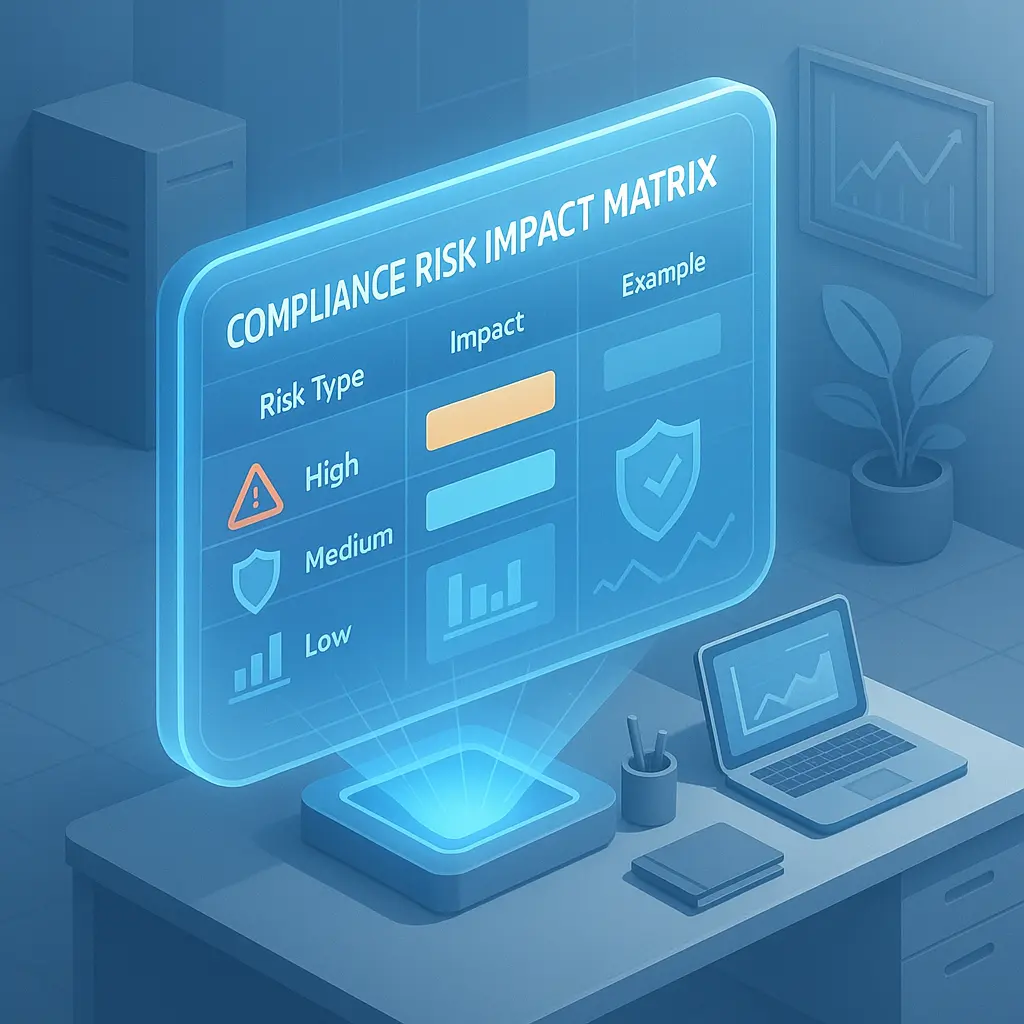
Compliance Risk Impact Matrix
| Risk Type | Impact | Example |
|---|---|---|
| Training Lapses | Regulatory fines, license suspension | Missed annual safety certification |
| Incomplete Records | Failed audit, operational downtime | Missing training history for key staff |
| Expired Certificates | Increased legal exposure, loss of contracts | Data privacy certificate expired mid-project |
| Manual Tracking Errors | Resource drain, compliance gaps | Spreadsheet-based tracking errors |
| Lack of Centralized Proof | Delayed audit response, poor transparency | No digital repository of certificates |
3. Certificates as Proof of Compliance: Beyond a Formality
In regulated industries, Compliance Training Certificates are not just acknowledgments of participation-they are legal and operational evidence of accountability. They transform compliance from a checkbox activity into a measurable, auditable process.
Legal, Ethical, and Skills Validation
- Certificates demonstrate that employees have completed required regulatory compliance training aligned with industry laws and standards.
- They validate ethical understanding and job-specific competence-especially in safety-critical or customer-facing roles.
- Legally recognized certificates protect organizations from claims of negligence or training oversight.
- Certification data ensures employees possess the right credentials before performing regulated tasks.
Audit Demands for Documented Proof
- Auditors now expect verifiable training documentation for every certified employee.
- Compliance Training Certificates serve as the fastest way to provide evidence during audit verification.
- Missing, expired, or inconsistent certificates are often viewed as compliance breaches.
- Callout: Over 38% of organizations have faced penalties or warnings due to missing or incomplete compliance records (Source: ComplianceWeek, 2024).
- Digital certification records streamline audit response, enabling compliance officers to provide proof within hours instead of days.
Standardizing Employee Compliance
- Certificates ensure consistent learning outcomes across departments and regions.
- They create a standardized method for assessing and documenting employee competence.
- Automated certificate tracking eliminates guesswork and ensures that every employee’s compliance status is visible and verifiable.
- This consistency strengthens accountability and builds a transparent culture of compliance throughout the organization.
By embedding certification into the compliance framework, companies transform documentation into a strategic safeguard-protecting both their workforce and their reputation.
4. Measuring the ROI of Certified Compliance Training
For forward-thinking organizations, Compliance Training Certificates deliver more than legal assurance-they drive measurable business performance. When tracked effectively, certificates become data points that quantify training impact, reduce risks, and improve operational outcomes.
Measurable Impact on Risk and Performance
- Certified training programs lead to fewer audit failures and reduced workplace incidents.
- Employees with valid Compliance Training Certificates demonstrate higher adherence to policies and safety protocols.
- Automated certificate tracking enhances oversight, preventing compliance lapses before they occur.
- Real-world data shows up to 40% reduction in compliance-related incidents in organizations with structured certification programs.
- This proactive approach supports risk reduction and builds lasting trust with regulators and clients.
Linking Certification to Business KPIs
- Productivity: Certified employees perform tasks with greater accuracy, reducing rework and downtime.
- Retention: Certification fosters confidence and career growth, improving employee engagement and loyalty.
- Cost Efficiency: Automated certificate workflows reduce manual tracking costs and administrative overhead.
- Audit Readiness: Quick access to verifiable records shortens audit cycles and lowers preparation time.
- Together, these metrics prove the ROI of compliance training-turning mandatory learning into measurable business value.
Leveraging Analytics for Proactive Compliance
- Certificate data fuels proactive compliance analytics, identifying patterns and potential risks early.
- Predictive dashboards help compliance heads forecast certificate expirations and prioritize retraining.
- Integration with HR and ERP systems provides a unified view of workforce readiness.
- With these insights, organizations can shift from reactive corrections to data-driven prevention.
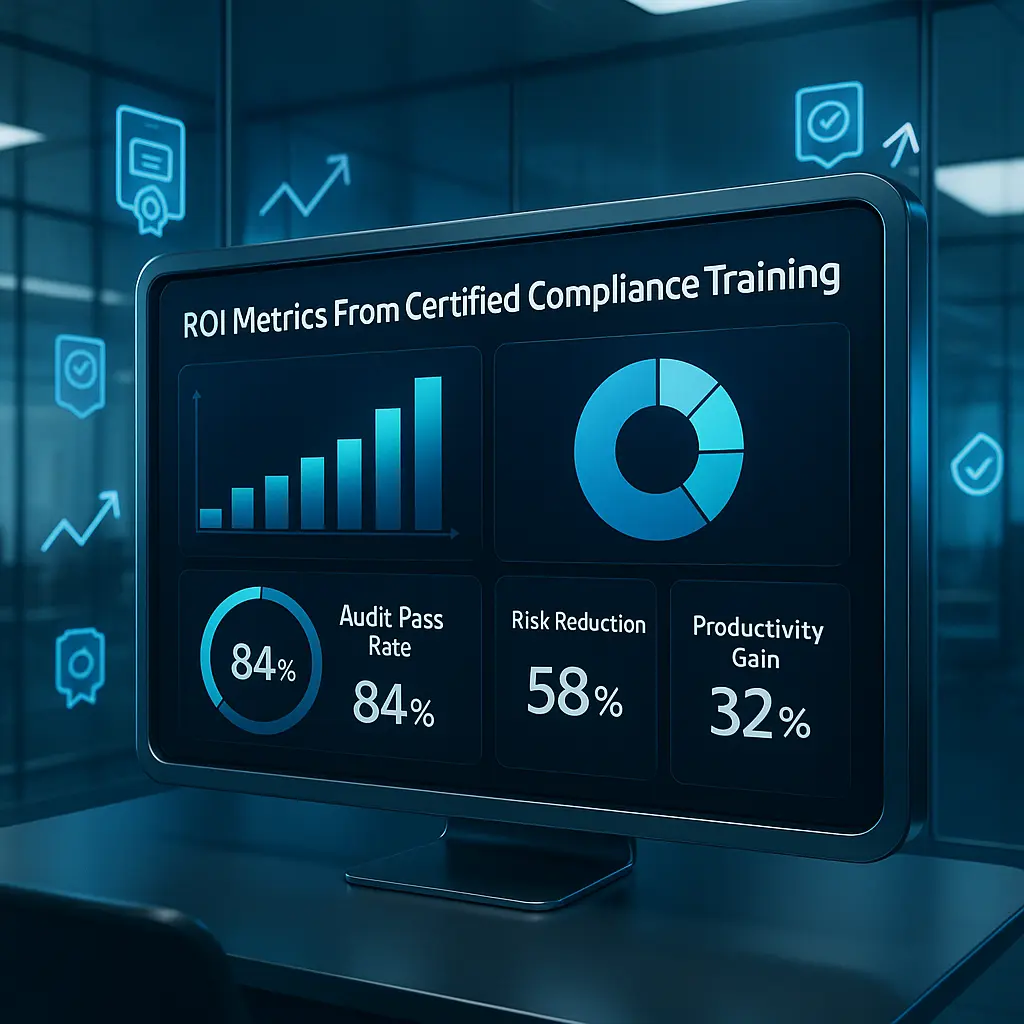
ROI Metrics From Certified Compliance Training
| KPI | Measurement Impact | Business Outcome |
|---|---|---|
| Audit Preparation Time | ↓ 45% reduction through centralized certificate data | Faster audit response, reduced resource strain |
| Compliance Incident Rate | ↓ 30–40% with validated certificates | Lower regulatory and legal exposure |
| Training Administration Costs | ↓ 25% via automation and digital tracking | Improved cost control, higher efficiency |
| Employee Retention Rate | ↑ 15% among certified staff | Stronger workforce stability and engagement |
5. Technology’s Role: Automating Certification Management
Modern organizations are moving from manual tracking to automated systems that ensure accuracy, speed, and accountability. Digital platforms now make Compliance Training Certificates easier to manage, monitor, and verify at scale-transforming compliance from an administrative burden into a strategic advantage.
Shift From Manual to Automated Compliance
- Manual spreadsheets and paper-based certificates are prone to human error and data loss.
- Automation ensures every certificate is stored, tracked, and updated in real time.
- Digital certification workflows eliminate delays, missed renewals, and inconsistent record-keeping.
- Organizations using automation report up to 60% faster audit preparation times due to centralized, searchable certificate data.
- Compliance Training Certificates in digital format provide instant verification, improving transparency across teams and departments.
Key LMS Features for Compliance Certification Management
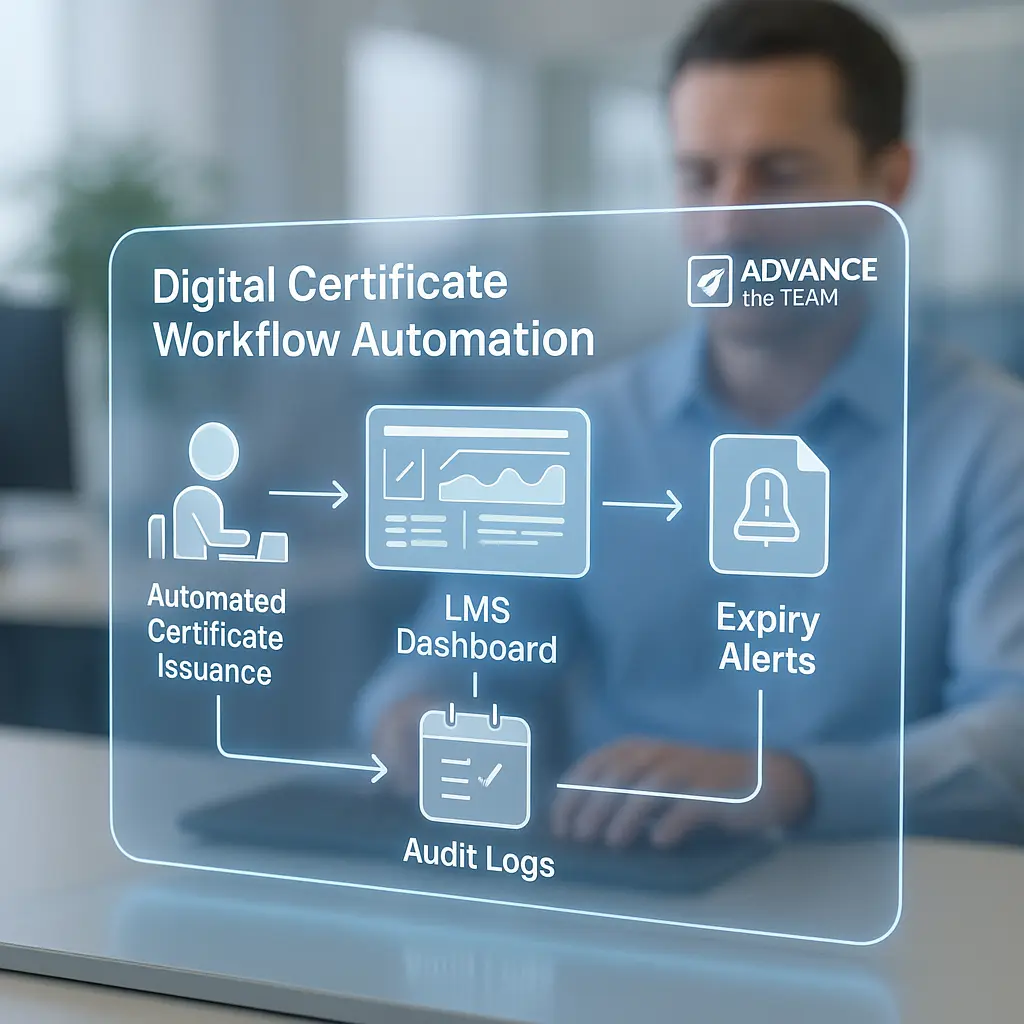
- Certificate Auto-Issuance: Generate certificates instantly after training completion.
- Expiry Alerts: Automated notifications prevent lapses by reminding employees and managers ahead of expiration.
- Audit Logs: Maintain a timestamped record of certificate creation, modification, and renewal for complete traceability.
- Real-Time Dashboards: Offer visibility into certification status across roles, locations, and departments.
- Data Security Controls: Protect certificate data to meet privacy and governance standards.
- These LMS capabilities ensure Compliance Training Certificates remain up to date, verifiable, and aligned with audit requirements.
Advance the Team: Driving Smart LMS Automation
- Advance the Team simplifies compliance certification management through full automation.
- The platform auto-generates certificates, sends compliance alerts for upcoming expiries, and maintains detailed audit logs for every learner.
- Managers can instantly pull compliance reports or evidence packs during audits-no manual effort required.
- This automation minimizes risk, reduces administrative overhead, and strengthens continuous compliance readiness.
Technology-driven Compliance Training Certificates redefine how organizations handle regulatory accountability-offering measurable efficiency, proactive control, and complete audit confidence.
6. How Do SMEs Meet Compliance Through Training?
Small and medium-sized enterprises (SMEs) face unique challenges in maintaining compliance while managing limited budgets and resources. This FAQ section explores practical ways SMEs can achieve audit readiness, maintain Compliance Training Certificates, and track measurable compliance outcomes.
Q1. Why is compliance training more challenging for SMEs?
- SMEs often lack full-time compliance officers or training managers.
- Budgets are limited, making manual tracking and frequent retraining unsustainable.
- With diverse roles and multitasking staff, maintaining up-to-date Compliance Training Certificates can easily fall through the cracks.
- As a result, many SMEs struggle to provide verifiable compliance proof during audits.
Q2. How can SMEs ensure training documentation is audit-ready without large HR teams?
- Adopt a digital LMS that automates certificate creation and tracking.
- Store certificates centrally for easy access during SME audit readiness reviews.
- Enable automated reminders for renewals and expiring certificates to prevent compliance lapses.
- Implementing these tools ensures every employee’s compliance record is instantly verifiable.
Q3. What type of certificates are most critical for SMEs across sectors?
- Workplace safety and health certificates.
- Data protection and privacy compliance certificates (especially post-GDPR).
- Industry-specific training certificates-e.g., food safety, financial ethics, or cybersecurity.
- These Compliance Training Certificates help SMEs meet both regulatory and customer contract requirements.
Q4. How does Advance the Team help SMEs implement cost-effective compliance training at scale?
- Advance the Team automates the full lifecycle of compliance certification-from training completion to renewal.
- Its cost-effective compliance training model reduces manual effort and administrative costs by up to 40%.
- The LMS sends expiry alerts, manages version control, and maintains audit-ready logs automatically.
- SMEs gain full visibility into compliance metrics-enabling smarter resource allocation and continuous improvement.
Q5. What metrics should SMEs track to prove compliance ROI?
- Certificate completion rate across teams.
- Audit success rate and time saved in preparation.
- Incident reduction percentage after certified training.
- Training cost savings from automation.
- Tracking these compliance metrics demonstrates real ROI and builds trust with partners and regulators.
By leveraging technology like Advance the Team, SMEs can maintain complete Compliance Training Certificates visibility, ensure cost efficiency, and achieve ongoing compliance confidence-all without expanding headcount or budget.
7. Designing a Certificate Strategy That Works
A strong compliance certificate strategy ensures training efforts align with global standards, stay current through renewals, and reinforce continuous learning across the organization. When planned correctly, Compliance Training Certificates become a proactive compliance tool, not just a post-training artifact.
Aligning Certifications With Standards
- Map each training program to regulatory frameworks like ISO, OSHA, and GDPR compliance.
- Define certificate requirements per role and regulatory scope.
- Maintain documentation that directly links training modules to each compliance mandate.
- Standardized Compliance Training Certificates simplify verification for auditors and clients.
- Cross-reference certificates during internal audits to ensure every employee meets required standards.
Automating Renewal and Expiry Management
- Automate certificate renewal reminders to prevent lapses in compliance.
- Use LMS tools to trigger renewal training based on certificate expiration dates.
- Maintain renewal histories for quick audit access and internal reporting.
- Automating this cycle minimizes risk exposure and improves organizational reliability.
Fostering Continuous Compliance Learning
- Introduce micro-certifications to keep compliance learning ongoing rather than one-time.
- Encourage refresher modules that reinforce core compliance principles.
- Recognize and reward timely certificate renewals to strengthen a culture of responsibility.
- Combine renewal automation with short, focused learning paths to make compliance more engaging and sustainable.
A well-structured certificate strategy transforms compliance into a continuous process-ensuring consistency, regulatory alignment, and a workforce that stays compliant by design.
8. Case Study 1: Manufacturing Firm Cuts Audit Time by 50%
A mid-sized manufacturing company faced recurring audit delays and compliance inefficiencies due to fragmented training documentation. Implementing Compliance Training Certificates through a digital system transformed their compliance operations and measurable outcomes.
Problem
- Manual tracking of training completions and certificate renewals led to frequent data inconsistencies.
- Multiple production sites stored records separately, making audit verification difficult.
- Compliance teams spent excessive time reconciling missing or expired certificates.
- The lack of a centralized view increased operational risk and delayed audit readiness.
Solution
- The organization implemented Advance the Team LMS to automate certificate management and standardize training documentation.
- Introduced real-time dashboards for compliance tracking across multiple locations.
- Automated expiry alerts and renewal workflows for all regulated job roles.
- Enabled on-demand export of digital Compliance Training Certificates for internal and external audits.
Results
- 50% faster audit preparation time, with all compliance documents accessible within hours.
- 30% reduction in training administration costs due to automation.
- 20% improvement in compliance score during the next regulatory inspection.
- Fully traceable certificate histories improved transparency and accountability across teams.
Takeaway
By using Advance the Team LMS, the manufacturing firm turned fragmented training data into a unified, verifiable compliance record-strengthening audit readiness and achieving measurable efficiency gains.
9. Case Study 2: Healthcare SME Achieves Full Compliance Readiness
A growing healthcare SME struggled with inconsistent training documentation and rising compliance errors. Transitioning to a digital certification system improved accuracy and boosted overall compliance visibility.
Problem
- Training completions were tracked manually, leading to missing and outdated certificates.
- Frequent compliance errors caused by staff turnover and incomplete documentation.
- Leadership lacked real-time visibility into training compliance status across departments.
Solution
- Deployed a centralized LMS to store and track all Compliance Training Certificates digitally.
- Automated certificate updates and renewal notifications to prevent data gaps.
- Introduced role-based dashboards for compliance officers to monitor progress by department.
Results
- 100% accuracy in certification records verified during the next audit cycle.
- 35% reduction in compliance errors within six months of implementation.
- Improved record visibility, enabling quick evidence retrieval during unannounced audits.
- Staff participation in compliance training rose by 25%, ensuring sustained accountability.
Takeaway
Through automation and centralized management, the healthcare SME achieved full audit readiness, improved accuracy, and established a scalable foundation for long-term compliance success.
10. Frequently Asked Questions
A well-managed compliance ecosystem depends on consistent documentation, smart integrations, and proactive monitoring. Below are common questions organizations ask when optimizing Compliance Training Certificates within their compliance strategy.
Q1. What happens if an employee’s certificate expires mid-project?
- The employee may be restricted from performing regulated tasks.
- Automated alerts help identify and renew expiring certificates before project impact.
- Renewal tracking ensures zero disruption in compliance continuity.
Q2. How do digital certificates improve audit readiness?
- Digital records are time-stamped and verifiable at any time.
- They reduce manual searches, saving hours during audits.
- Centralized dashboards make compliance proof instantly available for auditors.
Q3. Can certification data integrate with HR or ERP systems?
- Yes, modern LMS platforms allow integration benefits such as auto-syncing employee profiles and training data.
- Integration eliminates double-entry errors and keeps compliance records always current.
- This creates a unified source of truth across HR, training, and compliance operations.
Q4. How do organizations prevent compliance tracking errors?
- Automate certificate issuance and expiry alerts.
- Use audit logs and access controls for transparency.
- Conduct quarterly system checks to ensure data accuracy and policy alignment.
Q5. How can compliance teams measure overall training effectiveness?
- Track certificate completion rates, incident reductions, and audit success ratios.
- Compare pre- and post-training compliance data for measurable improvement.
- Use analytics dashboards to forecast risks and continuously refine compliance programs.
Smart automation, integrations, and accurate Compliance Training Certificates collectively prevent human error, streamline compliance processes, and keep organizations perpetually audit-ready
11. Compliance Benchmarks and Industry Insights
Understanding where your organization stands against industry benchmarks is critical to improving compliance maturity and demonstrating measurable value from Compliance Training Certificates.
Key Compliance Performance Metrics
- Average certificate completion rate across industries: 85–92% among high-performing organizations.
- Companies with digital certificate tracking report 30% higher audit success rates.
- Automated certification renewals reduce compliance breaches by up to 40% annually.
- Real-time dashboards improve reporting accuracy and shorten audit preparation cycles.
Benchmark Data and Trends
- SMEs adopting LMS automation achieve compliance parity with larger enterprises within 12–18 months.
- Industries with frequent regulatory changes (finance, healthcare, manufacturing) show the fastest ROI from certification automation.
- Organizations tracking compliance analytics quarterly outperform peers in audit consistency and performance visibility.
- Continuous certificate management directly correlates with better workforce accountability and governance ratings.
Using benchmark-driven insights helps compliance leaders set measurable goals, optimize training investments, and sustain consistent, data-backed compliance excellence.
12. The Strategic Value of Certification in Workforce Development
Compliance certification is no longer just a legal requirement-it’s a business growth catalyst. When implemented effectively, Compliance Training Certificates enhance workforce capability, retention, and long-term organizational resilience.
Driving Employee Retention and Engagement
- Certified employees feel more confident and valued, boosting morale and loyalty.
- Recognition of certifications reinforces professional growth and accountability.
- Ongoing compliance learning reduces turnover by building trust and career stability.
Turning Compliance into a Performance Driver
- Certificates align compliance learning with measurable business KPIs.
- Employees trained and certified in critical processes deliver higher-quality work.
- Certification data supports performance reviews, identifying top-performing teams.
- Reduced incidents and improved productivity directly impact profitability.
Building a Strong Compliance Culture
- Certification creates a shared sense of responsibility across the organization.
- Teams adopt proactive risk awareness rather than reactive compliance behavior.
- Transparent reporting and recognition foster integrity and trust internally.
- A culture built on verified compliance enhances brand reputation with regulators and clients alike.
By treating certification as a strategic asset, businesses transform compliance from obligation into opportunity—driving continuous improvement, employee excellence, and sustainable growth.
Conclusion
A strong compliance framework goes beyond meeting regulations—it builds lasting organizational resilience.
Compliance Training Certificates play a key role in ensuring sustainability, governance, and operational integrity by maintaining consistent standards, preventing lapses, and fostering accountability across teams. With regular certificate renewals and data-backed tracking, companies can stay agile as regulations evolve.
Platforms like Advance the Team make this process seamless by automating certification workflows, renewals, and audit trails-helping organizations maintain continuous compliance while improving efficiency and readiness for future audits.
By integrating certification data into daily operations, businesses can turn compliance into a measurable performance driver. Ultimately, this approach builds trust, reduces risk exposure, and supports a culture of continuous improvement.