
Table of Contents
- 1. Why Is AI Personalization Transforming Corporate LMS in 2026?
- 2. What Is an AI Personalized LMS?
- 3. Why Do Companies Need AI-Driven LMS Platforms?
- 4. How Do AI Personalized Learning Paths Work?
- 5. What Features Should an AI Personalized LMS Have?
- 6. How Does AI Personalized LMS Benefit Businesses?
- 7. How Are Businesses Using AI in Corporate LMS Platforms?
- 8. How Does AI Improve LMS Completion Rates?
- 9. What Challenges Come With AI in Corporate Learning?
- 10. What Should Businesses Look for in an AI Personalized LMS?
- 11. How Does Advance The Team Support AI-Driven Corporate Learning?
- 12. What Is the Future of AI Personalized LMS Beyond 2026?
- 13. Frequently Asked Questions
1. Why Is AI Personalization Transforming Corporate LMS in 2026?
AI personalization is transforming corporate LMS platforms because businesses need smarter, faster, and more adaptive employee training systems.
An AI personalized LMS helps organizations deliver customized learning experiences based on employee roles, skills, behavior, and performance. Instead of assigning the same training to every employee, AI automatically creates personalized learning paths that improve engagement and course completion rates.
In 2026, companies are using AI-powered learning systems to:
- Reduce onboarding time
- Automate employee training
- Improve workforce productivity
- Increase learning retention
- Scale corporate training efficiently
1.1 Why Are Traditional LMS Platforms Becoming Less Effective?
Traditional learning management systems follow a one-size-fits-all training model. Every employee receives identical learning content regardless of:
- Job role
- Experience level
- Learning speed
- Performance gaps
This creates several problems:
- Lower employee engagement
- Poor training completion rates
- Repetitive learning experiences
- Inefficient workforce development
Modern employees expect training experiences similar to platforms like Netflix, YouTube, or Spotify, where content is personalized based on user behavior. An AI personalized LMS brings this same level of personalization into corporate learning.
1.2 How Does AI Personalization Improve Employee Training?
AI improves employee training by analyzing learning behavior and automatically adjusting training experiences in real time.
An AI personalized LMS can:
- Recommend relevant courses
- Identify skill gaps
- Personalize learning paths
- Automate assessments
- Deliver adaptive microlearning
- Send intelligent reminders
This creates more efficient and engaging learning experiences for employees.
For example, if an employee struggles with compliance training modules, the AI system can automatically recommend additional learning resources or simplify the learning sequence based on performance data.
1.3 Why Are Businesses Investing in AI-Driven LMS Platforms?
Businesses are investing in AI-driven LMS platforms because workforce learning needs are changing rapidly.
Hybrid work, remote teams, and continuous upskilling requirements are pushing organizations to adopt smarter learning systems. Companies now need scalable platforms that can train employees faster while reducing manual administrative work.
An AI personalized LMS helps businesses:
- Automate workforce training
- Improve onboarding efficiency
- Standardize learning processes
- Reduce training costs
- Increase employee productivity
This is especially important for growing organizations managing large distributed teams.
1.4 How Is AI Changing Corporate Learning in 2026?
In 2026, AI is becoming the foundation of modern corporate learning strategies.
Organizations are moving from static training systems to adaptive learning environments that continuously improve employee development. AI-driven learning platforms now support:
- Predictive learning analytics
- Adaptive learning journeys
- Personalized skill development
- Automated content recommendations
- Intelligent workforce training
Modern workforce learning platforms like Advance The Team help businesses organize employee training, streamline onboarding workflows, and improve learning efficiency through centralized and automation-focused learning management systems.
As AI technology continues to evolve, businesses that adopt personalized learning systems will gain a major advantage in employee development, workforce productivity, and long-term organizational growth.
2. What Is an AI Personalized LMS?
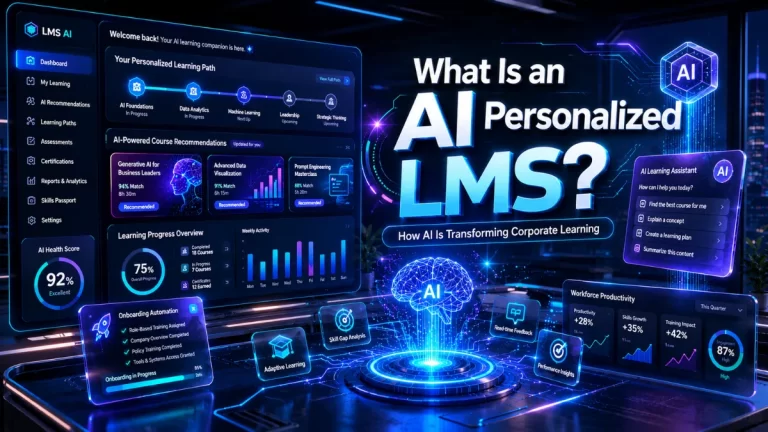
An AI personalized LMS is a learning management system that uses artificial intelligence to customize employee training experiences.
Unlike traditional LMS platforms, an AI personalized LMS analyzes employee behavior, learning progress, skill gaps, job roles, and performance data to deliver personalized learning paths automatically.
Instead of providing identical training content to every employee, AI-driven systems adapt learning experiences in real time to improve engagement, retention, and training outcomes.
Businesses use AI-powered LMS platforms to:
- Personalize employee learning
- Automate training delivery
- Improve onboarding experiences
- Increase course completion rates
- Support continuous workforce development
2.1 How Does an AI Personalized LMS Work?
An AI personalized LMS works by collecting and analyzing employee learning data.
The system tracks:
- Completed courses
- Quiz performance
- Learning speed
- Engagement levels
- Skill gaps
- Job responsibilities
Using machine learning algorithms, the LMS then recommends the most relevant training content for each employee.
For example:
- New employees may receive onboarding-focused training
- Managers may receive leadership development modules
- Sales teams may receive product and communication training
This creates a more efficient and targeted learning experience.
2.2 What Makes an AI Personalized LMS Different From Traditional LMS Platforms?
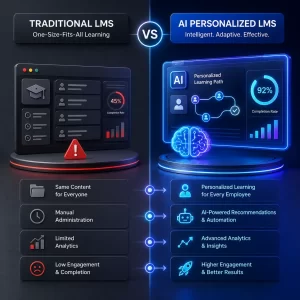
Traditional LMS platforms mainly focus on content management and course distribution. Most systems follow fixed learning structures where every employee receives the same training sequence.
An AI personalized LMS goes beyond static training delivery by adapting learning experiences automatically.
Here’s the difference:
<div class="custom-table-wrapper">
	<table class="custom-table">
		<thead>
			<tr>
				<th style="color:#FFFFFF; font-weight:600;">Traditional LMS</th>
				<th>AI Personalized LMS</th>
			</tr>
		</thead>
		<tbody>
			<tr>
				<td style="color:#440385; font-weight:500;">Same content for all employees</td>
				<td>Personalized learning paths</td>
			</tr>
			<tr>
				<td style="color:#440385; font-weight:500;">Manual course assignments</td>
				<td>Automated recommendations</td>
			</tr>
			<tr>
				<td style="color:#440385; font-weight:500;">Limited learner insights</td>
				<td>AI-driven analytics</td>
			</tr>
			<tr>
				<td style="color:#440385; font-weight:500;">Static learning journeys</td>
				<td>Adaptive learning experiences</td>
			</tr>
			<tr>
				<td style="color:#440385; font-weight:500;">Generic employee training</td>
				<td>Role-based skill development</td>
			</tr>
		</tbody>
	</table>
</div>
This personalization helps employees learn more effectively while reducing unnecessary training overload.
2.3 How Does AI Understand Employee Learning Behavior?
AI systems analyze employee interactions with learning content to identify patterns and preferences.
An AI personalized LMS can track:
- course engagement
- assessment scores
- content completion behavior
- learning consistency
- areas of difficulty
The system uses this data to improve future recommendations and personalize training delivery.
For example, if an employee learns faster through short videos instead of long documents, the LMS may prioritize video-based microlearning content in future modules.
This adaptive learning approach improves employee engagement and knowledge retention.
2.4 Why Is AI Personalization Important in Corporate Training?
AI personalization is important because modern employees expect flexible, relevant, and efficient learning experiences.
Generic corporate training often leads to:
- low engagement
- poor retention
- incomplete training programs
- employee frustration
An AI personalized LMS solves these challenges by delivering the right training content to the right employee at the right time.
This helps organizations:
- improve workforce productivity
- Accelerate employee onboarding
- reduce training costs
- support continuous upskilling
- scale learning programs efficiently
As businesses continue adopting hybrid work environments and digital workforce strategies, AI-powered learning systems are becoming essential for modern corporate training.
Platforms like Advance The Team help businesses organize structured employee learning workflows, centralize training management, and streamline workforce development processes through automation-focused learning solutions.
3. Why Do Companies Need AI-Driven LMS Platforms?
Companies need AI-driven LMS platforms to deliver faster, smarter, and more personalized employee training.
Modern businesses are managing remote teams, evolving skill requirements, and continuous workforce development needs. Traditional learning systems struggle to keep up with these changing demands.
An AI personalized LMS helps organizations automate learning processes, personalize employee training, and improve overall workforce performance.
Companies are increasingly adopting AI-powered learning systems to:
- improve employee engagement
- reduce onboarding time
- automate repetitive training tasks
- increase course completion rates
- support scalable workforce learning
3.1 Why Is One-Size-Fits-All Training Failing?
Traditional training systems often assign the same learning content to every employee regardless of:
- department
- experience level
- learning pace
- job responsibilities
- existing skills
This approach creates learning fatigue and reduces employee motivation.
For example, experienced employees may find beginner-level training repetitive, while new employees may struggle with advanced modules. An AI personalized LMS solves this problem by adapting training based on individual employee needs.
Personalized learning helps employees focus only on the most relevant skills and training content.
3.2 How Has Remote Work Changed Corporate Learning?
Remote and hybrid work environments have transformed how businesses train employees.
Distributed teams now require:
- flexible learning access
- mobile-friendly training
- self-paced learning
- automated onboarding
- centralized learning systems
An AI personalized LMS supports remote workforce training by providing adaptive learning experiences that employees can access from anywhere.
AI-powered learning systems also help managers track employee progress and identify learning gaps without manual supervision.
This makes workforce training more scalable and efficient for modern organizations.
3.3 Why Are Employees Demanding Personalized Training?
Employees expect workplace learning to be relevant, engaging, and easy to consume.
Modern learners are already familiar with personalized digital experiences from platforms like:
- Netflix
- YouTube
- Spotify
- Amazon
They now expect similar personalization in corporate learning environments.
An AI personalized LMS delivers this experience by recommending learning content based on:
- employee behavior
- training history
- performance data
- career goals
- role-specific requirements
This increases employee engagement and improves knowledge retention.
3.4 How Does AI Improve Workforce Development?
AI improves workforce development by helping businesses identify skill gaps and deliver targeted employee training.
An AI personalized LMS can automatically recommend
- recommend upskilling programs
- personalize learning journeys
- analyze workforce performance trends
- automate as Adjustments
- adjust learning difficulty levels
This helps businesses create more effective employee development strategies.
Instead of relying on generic training programs, organizations can build data-driven learning experiences that align with business goals and workforce needs.
3.5 Why Is Adaptive Learning Becoming Essential?
Adaptive learning is becoming essential because employee learning needs constantly change.
Industries are evolving rapidly due to:
- automation
- artificial intelligence
- digital transformation
- changing customer expectations
Businesses need training systems that can evolve just as quickly.
An AI personalized LMS continuously updates learning recommendations based on employee progress and organizational requirements. This creates a more dynamic and future-ready workforce learning environment.
Modern workforce learning platforms like Advance The Team help organizations simplify employee training management, streamline onboarding workflows, and support scalable learning operations through centralized and automation-focused systems.
As workforce expectations continue to evolve, AI-driven LMS platforms are becoming a critical part of long-term business growth and employee development strategies.
4. How Do AI Personalized Learning Paths Work?
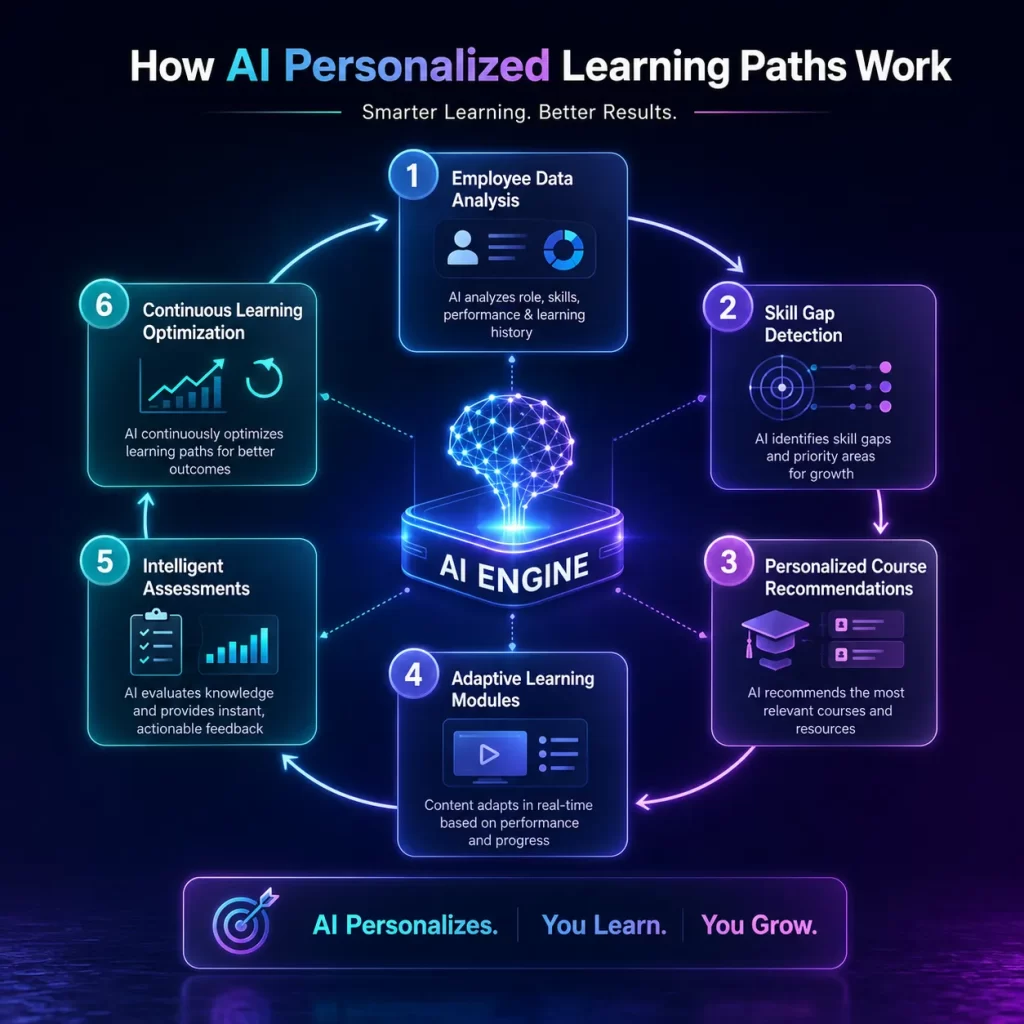
AI personalized learning paths work by analyzing employee data and automatically recommending the most relevant training content.
An AI personalized LMS uses artificial intelligence and machine learning to create customized learning journeys for each employee. The system continuously tracks learning behavior, performance, and skill development to adjust training experiences in real time.
Instead of following fixed training sequences, employees receive learning paths tailored to their:
- job roles
- skill levels
- learning pace
- career goals
- performance gaps
This makes employee training more effective and engaging.
4.1 How Does AI Identify Employee Skill Gaps?
AI identifies skill gaps by analyzing employee learning data and performance patterns.
An AI personalized LMS can evaluate:
- assessment scores
- completed training modules
- quiz results
- learning behavior
- role-specific competencies
The system then compares the data with required skills for a specific role or department.
For example, if a customer support employee struggles with product knowledge assessments, the LMS may automatically recommend additional training modules related to communication or product education.
This helps businesses deliver targeted employee upskilling programs.
4.2 How Does AI Recommend Personalized Training Content?
AI recommends training content based on employee learning behavior and performance insights.
An AI personalized LMS analyzes:
- course engagement
- learning preferences
- completion history
- content interaction patterns
- knowledge retention levels
The system then suggests the most relevant learning materials for each employee.
These recommendations may include:
- video lessons
- microlearning modules
- quizzes
- interactive simulations
- role-based training programs
This personalized approach improves employee engagement and reduces unnecessary training overload.
4.3 How Does Adaptive Learning Improve Employee Training?
Adaptive learning improves employee training by adjusting content difficulty and learning sequences automatically.
An AI personalized LMS can:
- simplify difficult
- recommend additional resources
- skip repetition
- accelerate advanced learning paths
- personalize training speed
This creates a more efficient learning experience for employees with different skill levels and learning styles.
For
- Beginners may receive foundational trainiExperienced
- Experienced employees may move directly to advanced modules
This reduces training fatigue and improves course completion rates.
4.5 How Does AI Adjust Learning in Real Time?
AI continuously monitors employee progress and updates learning experiences instantly.
An AI personalized LMS uses real-time learning analytics to:
- track engagement Monitorels
- monitor assessment performance
- identify learning challenges
- personalize future recommendations
If an employee struggles with specific topics, the system may automatically:
- recommend revision modules
- provide shorter lessons
- assign interactive learning content
- trigger additional assessments
This real-time adaptation helps employees learn more efficiently.
4.6 How Are AI Personalized Learning Paths Used in Corporate Teams?
Businesses use AI personalized learning paths to improve workforce development across multiple departments.
An AI personalized LMS helps organizations create customized learning journeys for:
- employee onboarding
- compliance training
- leadership development
- sales training
- technical skill development
- customer service education
Different employees receive different learning experiences based on their responsibilities and skill requirements.
For example:
- HR teams may receive compliance-focused training
- Sales teams may receive communication and prod from UCT managers
- Managers may receive leadership development modules
This creates more targeted and scalable workforce learning programs.
Modern learning platforms like Advance The Team support structured workforce training, centralized employee learning management, and automation-driven learning workflows that help businesses improve training consistency and operational efficiency.
As organizations continue investing in employee development, AI-powered learning paths are becoming one of the most important features of modern corporate LMS platforms.
5. What Features Should an AI Personalized LMS Have?
An AI personalized LMS should include automation, adaptive learning, analytics, and personalized employee training features.
Modern businesses need more than basic course management tools. An AI personalized LMS should help organizations automate workforce training, improve employee engagement, and create data-driven learning experiences.
The most effective AI-powered LMS platforms combine:
- personalized learning paths
- intelligent automation
- predictive analytics
- adaptive assessments
- centralized learning management
These features help businesses deliver scalable and efficient employee training programs.
5.1 What Are Smart Course Recommendations?
Smart course recommendations use AI to suggest the most relevant learning content for employees.
An AI personalized LMS analyzes:
- employee roles
- completed courses
- assessment performance
- learning behavior
- skill gaps
The system then recommends personalized training modules based on employee needs.
FoNewxample:
- new hires may receive onboarding courses
- managers may receive leadership training
- technical teams may receive advanced skill development modules
This improves learning relevance and employee engagement.
5.2 How Does AI Automate Training Content Creation?
AI helps automate training content generation and content updates.
An AI personalized LMS can:
- Generate qui
- Create a recommendation
- Recommend learning modules
- Organizing modules
- Update outdated content automatically
This reduces manual workload for HR and training teams.
AI-powered content automation also helps businesses scale employee learning programs faster while maintaining training consistency across departments.
5.3 What Are AI-Powered Employee Assessments?
AI-powered assessments evaluate employee performance more intelligently.
Traditional assessments often provide limited insights. An AI personalized LMS can analyze:
- Learning progress
- Response accuracy
- Completion behavior
- Knowledge retention
- Engagement patterns
The system then adjusts future learning recommendations based on assessment results.
For example, employees struggling with specific concepts may automatically receive additional learning resources or simplified training modules.
This creates more adaptive employee training experiences.
5.4 How Does Predictive Analytics Improve Learning?
Predictive analytics helps businesses identify learning trends and employee performance risks.
An AI personalized LMS uses learning data to predict:
- Employee training outcomes
- Skill development progress
- Potential learning gaps
- Course completion likelihood
This helps managers make better workforce training decisions.
For example, if employees consistently struggle with a compliance module, the system may identify the issue early and recommend training improvements.
Predictive analytics also helps organizations improve long-term workforce development strategies.
5.5 How Do Intelligent Learning Reminders Increase Engagement?
Intelligent reminders help employees stay consistent with training programs.
An AI personalized LMS can automatically:
- Send personalized reminders
- Remind employees about incompRecommendles
- Recommend upcoming learning activities
- Encourage continuous learning
Unlike generic reminders, AI-powered notifications are based on employee behavior and engagement patterns.
This improves:
- Training participation
- Course completion rates
- Employee learning consistency
5.6 What Role Do AI Assistants Play in Corporate Learning?
AI assistants provide employees with faster access to learning support and training information.
An AI personalized LMS may include conversational AI tools that help employees:
- Find learning resources
- Answer trainiReceivetions
- Receive course recommendations
- Access onboarding guidance
AI learning assistants improve accessibility and reduce dependency on manual support teams.
This creates a smoother employee learning experience, especially for remote and hybrid workforces.
5.7 Why Is Mobile Learning Important in AI LMS Platforms?
Mobile learning allows employees to access training anytime and from anywhere.
Modern employees often prefer:
- Short learning sessions
- Mobile-friendly content
- Flexible learning schedules
An AI personalized LMS supports mobile workforce learning by delivering adaptive training experiences across devices.
Mobile learning is especially useful for:
- Remote teams
- Field employees
- Sales professionals
- Distributed organizations
This improves workforce training accessibility and employee engagement.
Platforms like Advance The Team help businesses centralize employee learning, organize structured training workflows, and improve workforce training efficiency through automation-focused learning management systems.
As AI technology continues evolving, businesses are increasingly prioritizing intelligent LMS platforms that combine personalization, automation, analytics, and scalable employee learning capabilities.
6. How Does AI Personalized LMS Benefit Businesses?
An AI personalized LMS helps businesses improve employee training, increase engagement, and scale workforce learning more efficiently.
Modern organizations need faster and more adaptive employee training systems. An AI personalized LMS helps companies automate learning processes, personalize training experiences, and improve workforce performance using artificial intelligence and data-driven learning insights.
Businesses using AI-powered learning systems can:
- Improve employee productivity
- Reduce onboarding time
- Increase training completion rates
- Lower training costs
- Support continuous workforce development
These benefits make AI-driven learning platforms a critical part of modern corporate training strategies.
6.1 How Does AI Increase Employee Engagement?
AI increases employee engagement by delivering more relevant and personalized learning experiences.
Traditional training programs often overwhelm employees with unnecessary content. An AI personalized LMS solves this problem by recommending training modules based on:
- Employee roles
- Learning preferences
- Performance levels
- Skill gaps
- Career development goals
Employees are more likely to complete training when learning content feels useful and personalized.
AI-powered systems also improve engagement through:
- Adaptive learning paths
- Microlearning modules
- Intelligent recommendations
- Personalized reminders
This creates more interactive and employee-focused training experiences.
6.2 How Does AI Speed Up Employee Onboarding?
AI helps businesses automate and simplify employee onboarding processes.
An AI personalized LMS can automatically assign onboarding training based on:
- Job position
- Department
- Experience level
- Business requirements
New employees receive structured learning paths that guide them through:
- company policies
- compliance training
- role-specific education
- workflow processes
AI-powered onboarding reduces manual administrative work and helps employees become productive faster.
This is especially important for organizations managing remote or distributed teams.
6.3 Can AI Improve LMS Completion Rates?
Yes. AI significantly improves LMS completion rates by personalizing learning experiences and reducing training fatigue.
An AI personalized LMS keeps employees engaged by:
- adjusting learning difficulty
- recommending relevant content
- simplifying complex topics
- delivering shorter learning modules
- sending intelligent follow-ups
Employees are more likely to complete training when the content matches their learning pace and job responsibilities.
AI-powered learning systems also identify employees who may struggle with specific modules and automatically recommend additional support resources.
This creates higher training consistency across organizations.
6.4 How Does AI Improve Knowledge Retention?
AI improves knowledge retention by delivering learning content in more adaptive and engaging formats.
An AI personalized LMS uses:
- spaced learning techniques
- adaptive repetition
- interactive assessments
- personalized learning sequences
These methods help employees retain information more effectively compared to traditional static training systems.
For example, if employees forget key concepts from compliance training, the LMS may automatically recommend revision content or follow-up quizzes.
This continuous reinforcement improves long-term learning outcomes.
6.5 How Does AI Reduce Corporate Training Costs?
AI helps reduce training costs by automating repetitive learning management tasks.
An AI personalized LMS reduces the need for:
- manual course assignments
- repetitive instructor-led sessions
- Administrative Training Management
- generic training programs
Businesses can train larger teams more efficiently without significantly increasing operational costs.
AI-powered analytics also help organizations identify ineffective training content, allowing them to optimize workforce learning investments.
This creates more cost-effective employee development programs.
6.6 Why Is AI Better for Scalable Workforce Training?
AI makes workforce training more scalable because learning experiences can be personalized automatically for thousands of employees.
An AI personalized LMS helps businesses:
- manage distributed teams
- automate employee learning workflows
- centralize training management
- standardize learning experiences
- support continuous employee upskilling
This is especially important for growing companies with evolving workforce training requirements.
AI-powered learning systems also make it easier to deliver consistent employee training across multiple departments and locations.
6.7 How Does AI Improve Employee Productivity?
AI improves employee productivity by helping employees learn faster and focus on relevant skill development.
An AI personalized LMS reduces wasted training time by recommending only the most necessary learning content.
Employees spend less time navigating irrelevant courses and more time building practical skills related to their roles.
This helps businesses:
- close skill gaps faster
- improve workforce efficiency
- support continuous performance improvement
- Align employee learning with business goals.
Modern workforce learning platforms like Advance The Team help businesses organize employee training, automate onboarding workflows, and improve learning efficiency through centralized and scalable learning management systems.
As workforce learning becomes increasingly data-driven, AI-powered LMS platforms are helping organizations build more productive, adaptable, and future-ready teams.
7. How Are Businesses Using AI in Corporate LMS Platforms?
Businesses are using AI in corporate LMS platforms to automate training, personalize employee learning, and improve workforce development.
As employee training becomes more data-driven, companies are adopting AI-powered learning systems to create smarter and more adaptive workforce learning experiences.
An AI personalized LMS helps organizations:
- automate onboarding
- personalize training paths
- improve compliance education
- support continuous upskilling
- increase employee engagement
Businesses across industries are now using AI-driven learning platforms to improve training efficiency and workforce performance.
7.1 How Is AI Used in Employee Onboarding?
AI is helping businesses create faster and more structured onboarding experiences.
An AI personalized LMS can automatically assign onboarding modules based on:
- employee roles
- department requirements
- experience level
- business workflows
New employees receive personalized onboarding paths that guide them through:
- company policies
- workplace procedures
- compliance training
- role-specific responsibilities
AI-powered onbHow Does AI Improve Compliance Training?
AI improves compliance training by making mandatory learning more personalized and easier to manage.
Traditional compliance training often feels repetitive and difficult to complete. An AI personalized LMS helps businesses improve compliance learning through:
- adaptive learning modules
- automated reminders
- personalized assessments
- progress tracking
- intelligent reporting
AI systems can also identify employees who may be struggling with specific compliance topics and recommend additional learning support.
This improves:
- compliance completion rates
- workforce accountability
- training consistency
Organizations can also automate recurring compliance training workflows more efficiently.
7.2 How Is AI Used for Leadership Development?
Businesses use AI-powered LMS platforms to support leadership and management training programs.
An AI personalized LMS helps organizations create customized leadership learning paths based on:
- employee performance
- management responsibilities
- communication skills
- career growth goals
AI-driven learning systems may recommend:
- leadership workshops
- decision-making modules
- team management training
- communication skill development
This allows businesses to build stronger future leaders through personalized employee development strategies.
7.3 How Does AI Support Sales and Customer Service Training?
AI helps sales and customer support teams receive more targeted skill development training.
An AI personalized LMS can personalize learning programs based on:
- product knowledge gaps
- customer interaction performance
- communication effectiveness
- sales metrics
For example:
- Sales teams may receive advanced product training
- Customer support teams may receive communication improvement modules
AI-powered learning recommendations help employees improve practical skills that directly impact business performance.
This creates more effective workforce training outcomes.
7.4 How Does AI Help Continuous Employee Upskilling?
AI helps organizations deliver continuous learning opportunities as workforce skill requirements evolve.
An AI personalized LMS continuously analyzes employee progress and recommends:
- new certifications
- advanced learning modules
- industry-specific training
- emerging skill development programs
This supports long-term workforce adaptability.
Businesses can quickly train employees on:
- new technologies
- changing workflows
- updated compliance requirements
- evolving industry standards
Continuous AI-driven upskilling helps organizations remain competitive in rapidly changing industries.
7.5 How Do Different Departments Benefit From AI Learning Paths?
Different departments require different learning experiences. AI helps businesses personalize workforce training across teams.
An AI personalized LMS can create role-specific learning journeys for:
- HR teams
- sales departments
- customer support teams
- managers
- technical employees
- operations staff
For example:
- HR teams may focus on compliance and policy training
- technical teams may receive software and cybersecurity education
- Managers may receive leadership and communication development modules
This department-level personalization improves workforce training relevance and efficiency.
Modern learning platforms like Advance The Team help organizations centralize employee learning, organize structured training workflows, and improve workforce learning management through scalable and automation-focused systems.
As AI adoption continues to grow, businesses are increasingly using intelligent LMS platforms to build more agile, skilled, and future-ready workforces.
8. How Does AI Improve LMS Completion Rates?
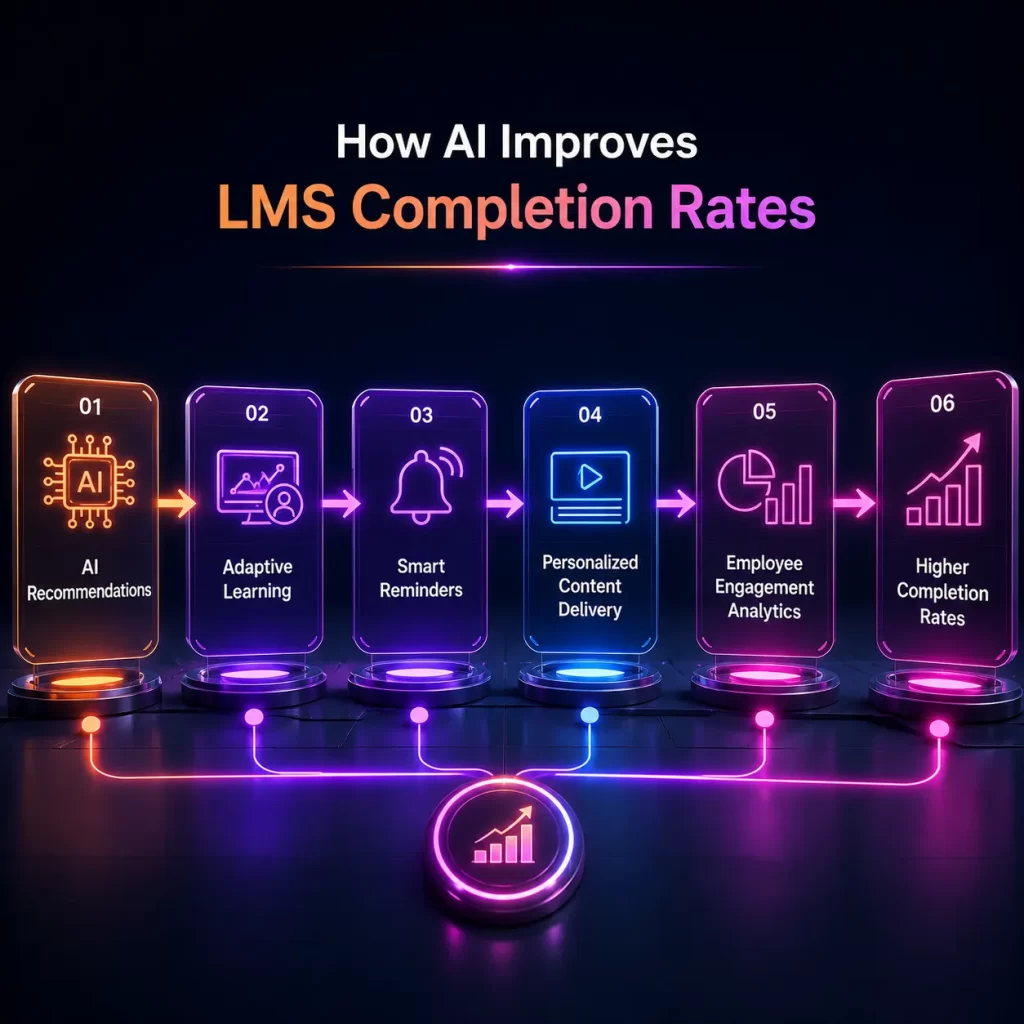
AI improves LMS completion rates by making employee training more personalized, engaging, and adaptive.
Many organizations struggle with low employee participation in traditional training programs. Employees often abandon courses because the content feels repetitive, irrelevant, or too time-consuming.
An AI personalized LMS solves these challenges by delivering learning experiences tailored to each employee’s needs, learning pace, and job responsibilities.
AI-powered learning systems improve completion rates by:
- personalizing learning paths
- simplifying complex topics
- automating reminders
- increasing engagement
- reducing training fatigue
This creates a more effective corporate learning environment.
8.1 How Does Personalized Content Increase Engagement?
Personalized content keeps employees more interested in training programs.
An AI personalized LMS recommends learning materials based on:
- employee roles
- skill levels
- learning behavior
- training history
- career goals
Employees are more likely to complete training when the content directly relates to their daily responsibilities.
For example:
- Sales employees may receive customer communication training
- Managers may receive leadership development modules
- New hires may receive onboarding-focused content
Relevant learning experiences increase employee motivation and participation.
8.2 How Does Adaptive Learning Reduce Training Fatigue?
Adaptive learning helps employees avoid unnecessary or repetitive training content.
Traditional learning systems often force employees to complete long training sequences regardless of their knowledge level. An AI personalized LMS adjusts learning paths automatically based on employee performance.
AI-powered systems can:
- skip already-mastered topics
- simplify difficult concepts
- Recommend shorter learning modules
- personalize learning speed
This reduces frustration and helps employees complete training more efficiently.
Adaptive learning also improves knowledge retention by delivering content in smaller and more manageable learning sessions.
8.3 How Does AI Keep Employees Motivated During Training?
AI helps maintain employee motivation through continuous engagement and personalized learning experiences.
An AI personalized LMS can:
- provide real-time programming
- recommend next learning steps
- personalize training goals
- deliver intelligent reminders
- suggest achievement milestones
Employees are more likely to stay engaged when they can clearly see learning progress and receive relevant recommendations.
Some AI-powered learning systems also use:
- gamification
- interactive quizzes
- microlearning modules
- performance feedback
These features create a more engaging corporate learning experience.
8.4 How Do Automated Reminders Improve Course Completion?
Automated reminders help employees stay consistent with training schedules.
An AI personalized LMS uses employee engagement data to send intelligent notifications about:
- incomplete modules
- upcoming deadlines
- Recommended learning activities
- overdue compliance training
Unlike generic email reminders, AI-powered notifications are personalized based on employee behavior and learning patterns.
For example:
- Employees who frequently delay training may receive shorter reminders
- active learners may receive advanced course recommendations
This increases training participation and course completion consistency.
8.5 Why Do Employees Respond Better to Personalized Learning?
Employees respond better to personalized learning because the experience feels more relevant and less overwhelming.
An AI personalized LMS focuses on delivering:
- role-specific learning
- adaptive training journeys
- targeted skill development
- flexible learning experiences
Employees no longer need to spend time navigating irrelevant training materials.
Instead, they receive customized learning recommendations that align with:
- job responsibilities
- performance goals
- career growth objectives
This creates a more efficient and employee-focused learning environment.
Modern workforce learning platforms like Advance The Team help businesses organize structured employee learning workflows, centralize training management, and improve workforce learning efficiency through automation-focused systems.
As corporate learning continues evolving in 2026, businesses are increasingly using AI-powered LMS platforms to improve employee engagement, maximize training completion rates, and build stronger workforce development strategies.
9. What Challenges Come With AI in Corporate Learning?
AI in corporate learning offers major benefits, but businesses must also address challenges related to privacy, accuracy, and system integration.
An AI personalized LMS can improve workforce training, automate learning management, and personalize employee development. However, organizations also need to manage the risks that come with AI-powered learning systems.
Common challenges include:
- data privacy concerns
- AI bias
- content accuracy issues
- integration complexity
- overdependence on automation
Businesses that address these challenges effectively can build more reliable and scalable corporate learning environments.
9.1 Are There Privacy Concerns With AI LMS Platforms?
Yes. Data privacy is one of the biggest concerns in AI-powered corporate learning.
An AI personalized LMS collects employee learning data such as:
- assessment results
- learning behavior
- engagement patterns
- training progress
- performance insights
Businesses must ensure this information is handled securely and ethically.
Organizations should prioritize:
- secure data storage
- access control systems
- compliance with privacy regulations
- transparent AI usage policies
Employees are more likely to trust AI-driven learning platforms when companies clearly explain how learning data is collected and used.
9.2 Can AI Recommendations Become Biased?
AI systems can sometimes generate biased recommendations if the training data is incomplete or inaccurate.
An AI personalized LMS relies on employee data and learning algorithms to personalize training experiences. If the system learns from limited or unbalanced data, it may create unfair recommendations.
For example:
- Some employees may receive fewer development opportunities
- Learning paths may become too narrow
- certain skill gaps may be overlooked
Businesses should regularly review AI-generated recommendations to ensure fairness and learning accuracy.
Human oversight remains important in AI-powered workforce training systems.
9.3 Why Is Human Oversight Still Important?
AI can automate many learning processes, but human guidance is still necessary for effective corporate training.
An AI personalized LMS can personalize content and automate recommendations, but it cannot fully replace:
- leadership coaching
- mentoring
- emotional intelligence
- workplace communication
- strategic decision-making
HR teams, trainers, and managers still play a critical role in:
- reviewing learning quality
- supporting employee growth
- monitoring workforce development
- improving training strategies
The most effective corporate learning environments combine AI automation with human expertise.
9.4 What Challenges Exist When Integrating AI LMS Systems?
Many businesses face technical challenges when implementing AI-powered learning platforms.
An AI personalized LMS often needs integration with:
- HR software
- payroll systems
- project management tools
- communication platforms
- employee databases
Poor integration can create:
- inconsistent learning data
- workflow inefficiencies
- administrative complexity
Businesses should choose LMS platforms that support scalable integrations and centralized workforce learning management.
Proper implementation planning is essential for successful AI adoption.
9.5 How Can Businesses Maintain Content Quality With AI?
AI can automate content generation, but businesses still need to maintain content accuracy and relevance.
An AI personalized LMS may automatically create:
- quizzes
- assessments
- learning recommendations
- training summaries
However, automated content should still be reviewed regularly by subject matter experts and training managers.
Businesses should ensure:
- Learning materials stay updated
- compliance information remains accurate
- training aligns with business goals
- AI-generated recommendations remain relevant
This helps organizations maintain high-quality workforce training experiences.
Modern learning platforms like Advance The Team help businesses organize centralized training workflows, improve learning management efficiency, and support scalable employee development through structured and automation-focused systems.
As AI adoption continues to grow in corporate learning, organizations that balance automation, security, and human oversight will build more effective and future-ready workforce training environments.
10. What Should Businesses Look for in an AI Personalized LMS?
Businesses should look for automation, personalization, scalability, analytics, and integration capabilities in an AI personalized LMS.
Choosing the right corporate learning platform is important for long-term workforce development. An AI personalized LMS should not only manage training content but also improve employee learning experiences through intelligent automation and adaptive learning features.
Modern organizations need LMS platforms that can:
- personalize employee training
- automate learning workflows
- support remote teams
- improve learning analytics
- scale workforce development efficiently
Selecting the right AI-powered LMS helps businesses improve training consistency, employee engagement, and operational efficiency.
10.1 Which AI Features Matter Most in Corporate LMS Platforms?
The most important AI features help businesses personalize learning and automate workforce training processes.
An AI personalized LMS should include:
- adaptive learning paths
- AI-driven course recommendations
- automated assessments
- predictive analytics
- intelligent learning reminders
- skill gap analysis
These features help organizations create more targeted and effective employee learning experiences.
AI-powered personalization also improves training relevance and employee participation.
10.2 Why Is Automation Important in Employee Training?
Automation reduces manual training management and improves workforce learning efficiency.
An AI-personalized LMS can automate:
- onboarding workflows
- course assignments
- employee assessments
- compliance reminders
- training progress tracking
This saves time for HR teams, managers, and training administrators.
Automation also ensures employees receive consistent learning experiences across departments and locations.
Businesses can scale workforce training more effectively without increasing administrative complexity.
10.3 How Important Are Reporting and Analytics Tools?
Reporting and analytics tools help businesses measure employee learning performance and training effectiveness.
An AI personalized LMS should provide insights into:
- employee progress
- course completion rates
- engagement levels
- skill development trends
- workforce learning gaps
AI-powered analytics help organizations make better training decisions using real-time learning data.
For example, businesses can identify:
- underperforming training modules
- departments needing additional support
- employees requiring personalized learning assistance
This improves overall workforce development strategies.
10.4 Why Should LMS Platforms Support HR Integrations?
HR integrations help businesses centralize workforce management and employee learning operations.
An AI personalized LMS should integrate with:
- HR management software
- payroll systems
- communication tools
- project management platforms
- employee databases
These integrations improve workflow efficiency and reduce repetitive administrative work.
For example:
- new employees can automatically receive onboarding training
- compliance records can sync across systems
- Employee progress can be updated in real time
Integrated systems create a smoother workforce learning experience.
10.5 What Makes an LMS Scalable for Growing Businesses?
A scalable LMS can support increasing employee training demands without reducing performance or learning quality.
An AI personalized LMS should help businesses:
- train larger teams efficiently
- manage distributed workforces
- personalize learning at scale
- automate workforce development workflows
Scalability is especially important for:
- fast-growing businesses
- remote organizations
- multi-location companies
- enterprise workforce training
AI automation helps businesses expand training operations without significantly increasing management complexity.
10.6 Why Is Mobile Accessibility Important for Employee Learning?
Employees increasingly prefer flexible and mobile-friendly learning experiences.
An AI personalized LMS should support:
- smartphone learning
- tablet access
- remote workforce training
- mobile microlearning
Mobile accessibility allows employees to complete training:
- from anywhere
- at flexible times
- during short learning sessions
This improves employee participation and training completion rates.
Mobile learning is especially valuable for field teams, sales professionals, and remote employees.
10.7 How Important Is Security in AI Corporate Training Platforms?
Security is essential because AI-powered LMS platforms manage sensitive employee learning data.
An AI personalized LMS should include:
- secure data storage
- role-based access controls
- encrypted learning records
- compliance support
- secure integrations
Businesses must protect employee information while maintaining reliable workforce learning operations.
Organizations should also ensure AI systems follow privacy regulations and internal security policies.
Modern workforce learning platforms like Advance The Team help businesses centralize employee training, automate learning workflows, and improve workforce development through structured and scalable learning management systems.
As AI adoption continues to reshape corporate learning, businesses that invest in flexible, secure, and intelligent LMS platforms will build stronger and more future-ready workforces.
11. How Does Advance The Team Support AI-Driven Corporate Learning?
Advance The Team helps businesses streamline employee training, centralize learning management, and improve workforce development through automation-focused learning solutions.
Modern organizations need scalable learning systems that can simplify workforce training while supporting employee growth and operational efficiency. Platforms like Advance The Team help businesses organize structured learning workflows and manage employee training more effectively.
As companies increasingly adopt an AI personalized LMS, centralized and automation-driven learning platforms are becoming essential for improving training consistency and workforce performance.
11.1 How Does Advance The Team Simplify Employee Training?
Advance The Team helps businesses simplify employee learning by centralizing training resources, onboarding workflows, and workforce development processes in one platform.
Organizations can manage:
- employee onboarding
- compliance training
- role-based learning
- SOP documentation
- workforce education
through a structured learning environment.
This reduces training confusion and helps employees access learning resources more efficiently.
11.2 How Does the Platform Improve Learning Management?
Managing workforce training across multiple departments can become difficult without centralized systems.
Advance The Team helps businesses improve learning management by organizing:
- training materials
- employee learning workflows
- onboarding programs
- compliance records
- progress tracking
A centralized approach supports more efficient employee learning operations and reduces administrative workload.
Businesses implementing an AI personalized LMS often benefit from structured learning systems that improve workforce training visibility and consistency.
11.3 How Does Automation Improve Workforce Training Efficiency?
Automation helps businesses reduce repetitive learning management tasks and improve workforce scalability.
Advance The Team supports automation-focused training processes that help organizations:
- streamline onboarding
- automate training workflows
- standardize learning delivery
- improve employee tracking
- reduce manual coordination
Automation is especially valuable for organizations managing:
- remote teams
- growing workforces
- multi-department training programs
When combined with an AI personalized LMS, automation can significantly improve employee learning efficiency and training completion rates.
11.4 Why Are Structured Learning Workflows Important?
Structured learning workflows help businesses deliver consistent employee training experiences.
Without organized systems, employees may experience:
- incomplete onboarding
- inconsistent training quality
- poor learning visibility
- delayed workforce development
Advance The Team helps organizations create standardized training workflows that improve:
- employee learning consistency
- onboarding efficiency
- compliance tracking
- workforce accountability
Structured learning systems also make it easier for businesses to scale employee development programs efficiently.
11.4 How Can Businesses Scale Employee Development More Efficiently?
Growing businesses need learning systems that can support larger teams without increasing operational complexity.
Advance The Team helps organizations scale workforce learning by supporting:
- centralized training management
- automation-driven learning workflows
- structured employee onboarding
- workforce learning organization
- scalable training operations
As businesses continue adopting AI-driven learning strategies, combining automation with an AI personalized LMS helps create more adaptive and future-ready employee training environments.
Organizations that invest in centralized workforce learning platforms are better positioned to improve employee development, operational efficiency, and long-term workforce performance in 2026 and beyond.
12. What Is the Future of AI Personalized LMS Beyond 2026?
The future of AI personalized LMS platforms will focus on hyper-personalized learning, predictive workforce development, and intelligent employee training automation.
Corporate learning is evolving rapidly as businesses adopt more advanced AI technologies. An AI personalized LMS is expected to become more adaptive, data-driven, and employee-focused in the coming years.
Future AI-powered learning systems will help organizations:
- personalize workforce learning at scale
- Predict employee skill needs
- automate training delivery
- improve workforce adaptability
- support continuous employee development
As AI capabilities continue advancing, corporate learning will become more intelligent and proactive.
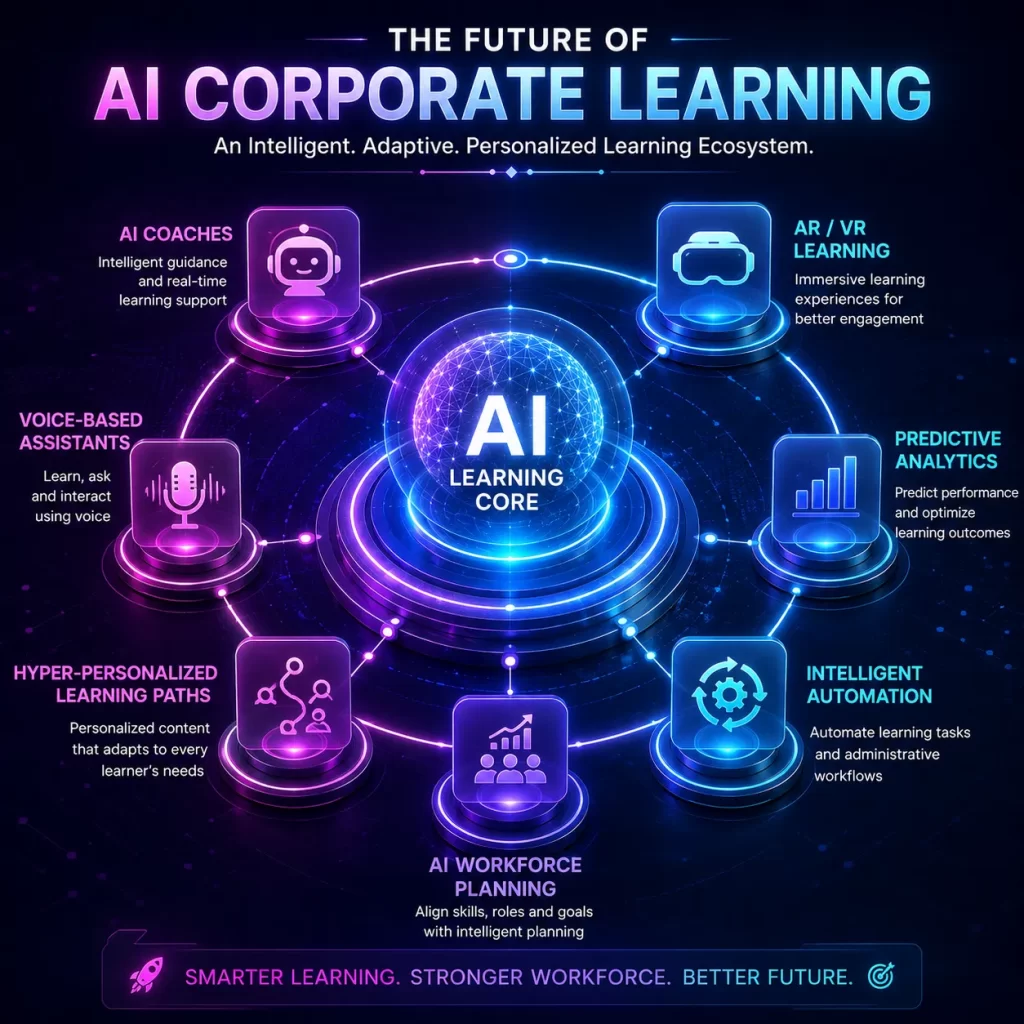
12.1 Will AI Coaches Replace Traditional Training Methods?
AI coaches are expected to become an important part of corporate learning, but they are unlikely to fully replace human trainers.
An AI personalized LMS may soon include AI learning assistants that can:
- answer employee questions
- Recommend learning resources
- guide onboarding processes
- track learning progress
- provide real-time feedback
These AI-driven systems can improve learning accessibility and provide faster support for employees.
However, businesses will still need human leadership for:
- mentoring
- emotional intelligence
- strategic guidance
- team development
- workplace collaboration
The future of workforce learning will likely combine AI automation with human expertise.
12.2 What Does Hyper-Personalized Learning Look Like?
Hyper-personalized learning goes beyond basic course recommendations.
Future AI personalized LMS platforms may personalize:
- learning formats
- content difficulty
- training schedules
- communication styles
- career development paths
AI systems will continuously analyze employee behavior and automatically adapt training experiences in real time.
For example:
- Visual learners may receive video-based training
- fast learners may skip introductory modules
- Employees struggling with concepts may receive simplified lessons
This creates more efficient and employee-centered learning experiences.
12.3 How Will Voice-Based Learning Impact Corporate Training?
Voice-based learning is expected to make employee training more accessible and interactive.
Future AI-powered learning systems may allow employees to:
- complete training using voice commands
- ask AI learning assistants questions
- receive spoken learning guidance
- access hands-free microlearning sessions
Voice-enabled learning can improve workforce training accessibility for:
- remote employees
- field teams
- mobile workers
- multitasking professionals
As voice AI technology improves, businesses may increasingly integrate conversational learning into corporate training environments.
12.4 Can AI Predict Future Workforce Skill Needs?
Yes. Predictive AI is expected to play a major role in workforce planning and employee development.
An AI personalized LMS may soon analyze:
- industry trends
- employee performance
- organizational skill gaps
- emerging technologies
- workforce productivity patterns
The system can then recommend future-focused training programs before skill shortages impact business performance.
Predictive learning analytics will help organizations build more agile and future-ready teams.
Businesses that invest in AI-driven workforce planning may gain a significant competitive advantage.
12.5 How Will AI Change Employee Learning Experiences in the Future?
AI will continue making employee learning more adaptive, flexible, and data-driven.
Future AI personalized LMS platforms may include:
- fully adaptive learning journeys
- real-time content generation
- intelligent workforce coaching
- predictive employee development
- immersive microlearning experiences
Employees will likely receive highly personalized learning experiences tailored to:
- career goals
- performance patterns
- preferred learning styles
- organizational needs
This will make workforce learning faster, more relevant, and more scalable.
Modern workforce learning platforms like Advance The Team are helping businesses prepare for the future of corporate learning through centralized training management, automation-focused workflows, and scalable employee development systems.
As AI continues transforming workplace learning, businesses that adopt intelligent and adaptive training strategies will be better positioned for long-term workforce growth and operational success.
13. Frequently Asked Questions
13.1 What is an AI personalized LMS?
An AI personalized LMS is a learning management system that uses artificial intelligence to customize employee training experiences based on learning behavior, skill gaps, job roles, and performance data.
Unlike traditional LMS platforms, AI-powered systems automatically recommend personalized learning paths, adaptive content, and targeted workforce training programs.
13.2 How does AI improve corporate training?
AI improves corporate training by automating learning processes and personalizing employee development.
An AI personal recommendation:
- Recommend relevant content
- identify employee skill gaps
- automate onboarding workflows
- personalize learning paths
- improve course completion rates
This helps businesses create more efficient and engaging workforce learning experiences.
13.3 What are AI personalized learning paths?
AI personalized learning paths are adaptive training journeys created using artificial intelligence.
An AI personalized LMS analyzes employee learning behavior, performance, and job responsibilities to recommend customized learning modules and skill development programs.
These personalized learning paths help employees learn more efficiently while improving workforce productivity.
13.4 Can AI improve LMS completion rates?
Yes. AI can significantly improve LMS completion rates by making employee training more relevant and engaging.
An AI personalized LMS improves training participation through:
- adaptive learning
- intelligent reminders
- personalized recommendations
- shorter learning modules
- role-specific content delivery
Employees are more likely to complete training when the learning experience matches their needs and responsibilities.
13.5 Why are companies adopting AI-driven LMS platforms in 2026?
Companies are adopting AI-driven learning systems to improve workforce training efficiency and support continuous employee development.
An AI personalized LMS helps businesses:
- automate workforce learning
- Reduce onboarding time
- improve employee engagement
- personalize corporate training
- scale learning operations efficiently
AI-powered learning platforms are becoming essential for modern workforce development strategies.
13.6 What features should businesses look for in an AI LMS?
Businesses should look for features that improve personalization, automation, and workforce learning management.
An AI personalized LMS should include:
- adaptive learning paths
- AI-driven analytics
- automated assessments
- onboarding automation
- mobile learning support
- compliance tracking
- scalable integrations
These features help businesses build smarter and more efficient employee training systems.
13.7 Is an AI-powered LMS suitable for remote teams?
Yes. AI-powered LMS platforms are highly effective for remote and hybrid workforces.
An AI personalized LMS allows employees to access personalized learning experiences from anywhere while helping businesses:
- track employee progress
- automate training workflows
- centralize workforce learning
- improve remote onboarding
This creates more flexible and scalable employee development programs.
13.8 How does AI help employee onboarding?
AI helps employee onboarding by automating training workflows and personalizing onboarding experiences.
An AI personalized LMS can automatically assign:
- onboarding modules
- compliance training
- role-specific learning paths
- company policy education
AI-powered onboarding systems also track employee progress and improve onboarding consistency across teams.
Modern workforce learning platforms like Advance The Team help businesses organize employee onboarding, centralize workforce training, and improve learning management through automation-focused systems.
<div style="border-radius:10px; margin-bottom:24px;">
    <h2 style="font-family: 'Inter', sans-serif; background:linear-gradient(219.84deg, #9a54db 39.82%, #2b4fd8 126.01%); color:white; padding:10px 20px; font-size:18px; font-weight:600; margin:0px; border-radius:10px 10px 0px 0px;">
        <span id="Conclusion">14. Conclusion</span>
    </h2>

    <div style="font-family: 'Inter', sans-serif; background:linear-gradient(219.84deg, #EAECFF 39.82%, #F6ECFC 126.01%); padding:15px 20px 10px 20px; border-radius:0px 0px 10px 10px; font-size:14px; font-weight:400;">

        <p>AI is transforming corporate learning by making employee training more personalized, adaptive, and efficient. An AI personalized LMS helps businesses improve onboarding, increase training completion rates, automate workforce learning, and support continuous employee development.</p>

        <p>As workforce expectations continue evolving in 2026, businesses are increasingly adopting AI-driven learning platforms to deliver smarter and more scalable training experiences.</p>

        <p>Modern workforce learning platforms like Advance The Team help organizations streamline employee training, centralize learning management, and improve workforce development through automation-focused learning solutions.</p>

        <p>Companies that invest in AI-powered learning systems today will be better prepared to build more skilled, productive, and future-ready teams.</p>

    </div>
</div>