
Table of Contents
1. Executive Summary
In today’s competitive business landscape, KPI-linked employee training ensures learning initiatives drive measurable organizational outcomes. Aligning employee development with defined performance metrics empowers leaders to connect workforce capability with strategic business growth.
Purpose and Scope of KPI-Linked Training
- Establish a structured approach to connect employee development with KPI-linked employee training frameworks.
- Provide a framework for operations heads and strategic leaders to ensure training efforts translate into measurable performance gains.
- Demonstrate how tools like learning management systems can streamline KPI-linked employee training alignment and progress tracking.
Why KPI Alignment Matters for Business Growth?
1. Directly ties workforce learning outcomes to organizational priorities, ensuring KPI-linked employee training drives performance.
2. Strengthens accountability by making results visible and measurable through KPI-focused tracking.
3. Enhances agility by aligning skill-building with evolving market and operational needs.
4.Transforms training into a strategic lever for growth, efficiency, and long-term value creation.
2. The Importance of KPI-Linked Training
Training initiatives often struggle to demonstrate tangible business impact when they aren’t tied to measurable outcomes. KPI-linked employee training ensures learning investments directly support strategic goals and operational priorities.
The Gap Between Traditional Training and Measurable Outcomes
- Conventional programs often prioritize participation and completion rates rather than business impact.
- Without KPI-linked employee training, training investments risk becoming cost centers with limited visibility on ROI.
How KPI-Driven Learning Enhances Operational Efficiency and Strategy Execution?
- Links everyday employee development to clear business performance metrics.
- Improves accountability by connecting learning progress to organizational results.
- By focusing on performance gaps, KPI-linked employee training boosts operational efficiency.
- Accelerates strategy execution by ensuring employee skills are aligned with evolving business goals.
3. Frameworks for Mapping KPIs to Training Programs
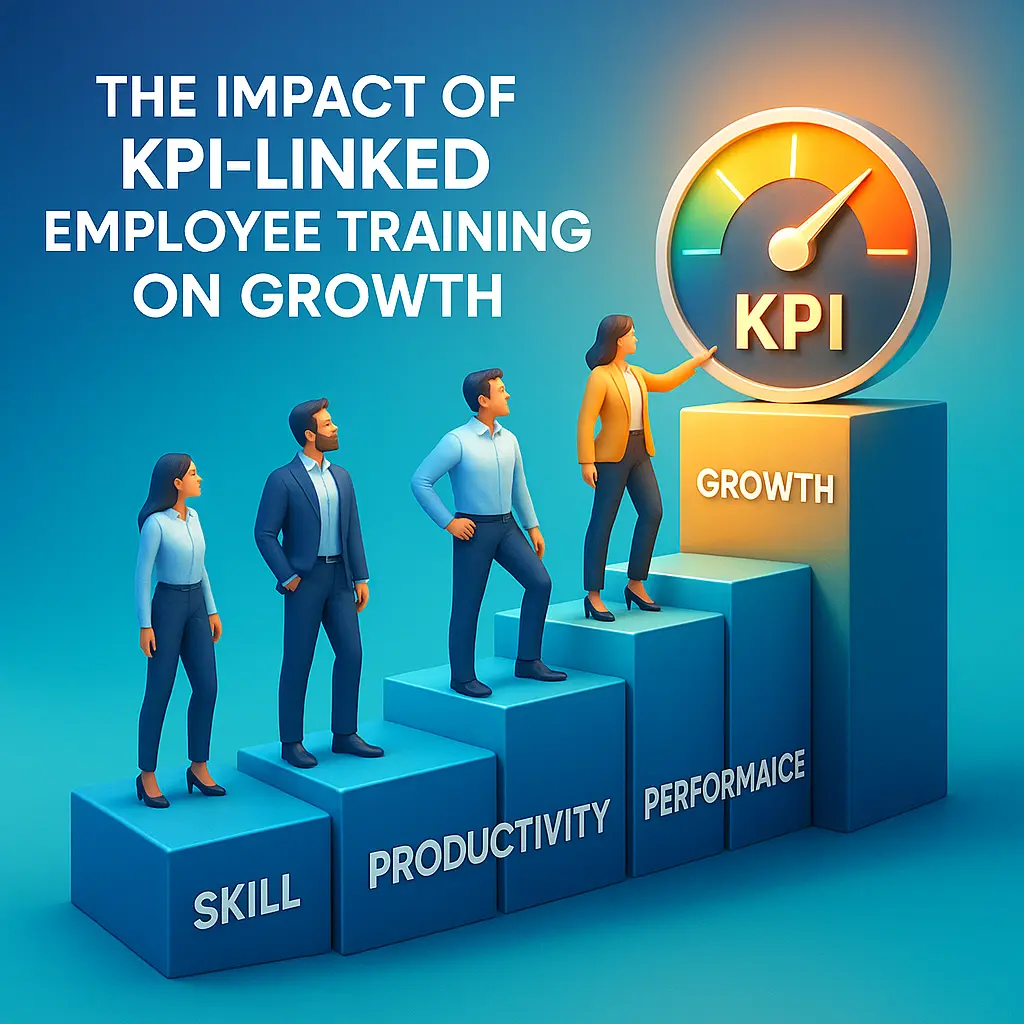
For KPI-linked employee training to succeed, organizations need a structured approach bridging high-level goals with individual performance. Practical frameworks help design programs that build skills and drive measurable business impact.
Defining Organizational KPIs and Cascading Them to Employee Roles
- Translate strategic business objectives into measurable KPIs at the organizational level.
- Cascade KPIs across departments to ensure employees see how KPI-linked employee training relates to their roles.
Models for Connecting Performance Goals with Learning Outcomes
- Map each KPI to specific skills or competencies required to achieve it.
- Align learning modules with targeted performance gaps to increase the relevance of KPI-linked employee training.
Practical Mapping Frameworks Strategic Leaders Can Apply
- Use competency matrices to link KPIs with required employee skill sets.
- Apply “goal-to-training” roadmaps that visualize how training activities impact KPI success.
- Incorporate feedback loops to regularly update KPI-linked employee training based on evolving priorities.
- Use Kirkpatrick Model
- The Kirkpatrick Model gives organizations a framework/reference to bucket data together to identify the impact a program or initiative has on an overall organization.
Reference:The Kirkpatrick Model
- The Kirkpatrick Model gives organizations a framework/reference to bucket data together to identify the impact a program or initiative has on an overall organization.
- Use 70-20-10 Model
- The 70-20-10 Model for Learning and Development is a commonly used formula within the training profession to describe the optimal sources of learning by successful managers. Refernece: How we learn 70:20:1
4. Implementation Strategies for KPI-Driven Training
Turning KPI-linked training from concept into practice requires disciplined execution and clear alignment with organizational priorities. KPI-linked employee training ensures development drives measurable outcomes with the use of right set of tools like Advance The Team.
Advance The Team enables the L&D Managers, Training Managers and other stackholders to set KIP based learning programs for their employees with effective measurable techniquies. Advance The Team is a one stop solution to manage training and monitoring the progress of employee’s knowledge graph.
Steps for Aligning Employee Learning Paths with Performance Objectives
- Identify role-specific KPIs and map them into individual KPI-linked employee training journeys.
- Customize training modules to directly address performance gaps and role expectations.
- Integrate continuous assessment to track learning progress against defined KPIs.
Role of Technology in Execution
- Leverage LMS platforms like Advance the Team to centralize learning delivery and track KPI-linked employee training outcomes efficiently.
- Use adaptive learning features to personalize content and keep training aligned with evolving objectives.
Building Accountability into the Implementation Process
- Set clear ownership for KPI outcomes at managerial and employee levels.
- Incorporate KPI-linked employee training metrics into performance reviews for stronger alignment.
- Foster a culture of shared accountability by linking team goals to organizational performance.
5. Measuring ROI and Performance Outcomes
For organizations investing in KPI-linked employee training, measuring ROI is critical to ensure learning translates into real business value. Robust tracking enables leaders to justify training spend and optimize programs.
Key Metrics for Evaluating the Impact of Training on KPIs
- Compare pre- and post-training KPI performance at individual and team levels.
- Measure productivity gains, error reduction, and revenue or efficiency improvements tied to training.
- Track employee engagement and retention as indirect indicators of long-term ROI.
Using Learning Analytics and Dashboards for Visibility into Progress
- Deploy analytics to monitor learner progress against defined KPIs in real time.
- Use dashboards to give executives granular visibility into KPI-linked employee training effectiveness.
Case Example: Advance the Team for Tracking KPI-Aligned Outcomes
- Advance the Team enables leaders to link employee learning data directly to performance metrics.
- Provides customizable reports and dashboards for transparent ROI evaluation across departments using KPI-linked employee training.
6. Overcoming Challenges in Mapping KPIs to Training
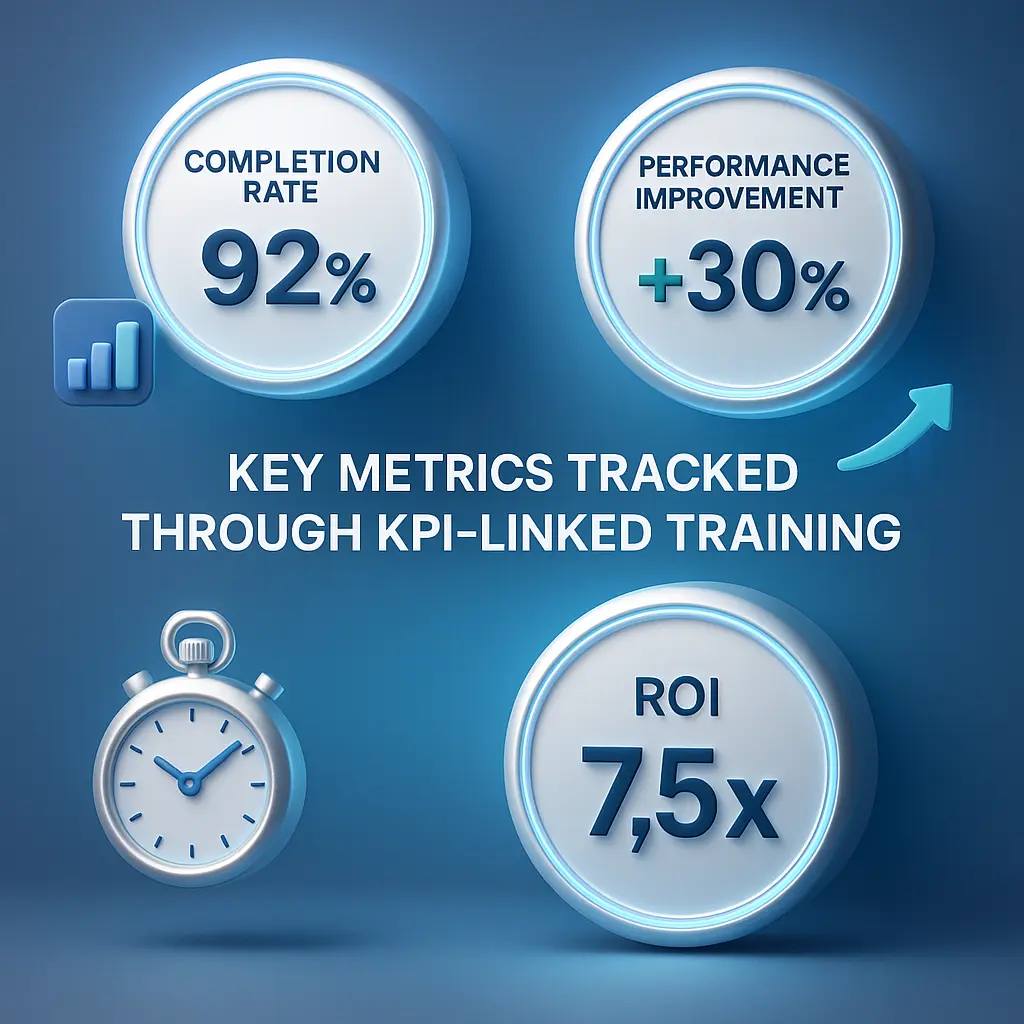
Aligning KPIs with training faces structural, cultural, and measurement-related barriers. KPI-linked employee training requires strategic solutions and change management practices.
Common Barriers
- Siloed data makes it difficult to connect training outcomes with performance metrics.
- Unclear or poorly defined KPIs lead to misaligned KPI-linked employee training priorities.
- Cultural resistance limits adoption of KPI-driven learning frameworks.
Strategic Solutions and Change Management Practices
- Integrate data systems to create a single source of truth for performance and learning.
- Standardize KPI definitions across teams for consistency.
- Use communication and leadership buy-in to reduce resistance and foster alignment.
Developing an Environment of Continuous Feedback and Improvement
- Embed frequent feedback loops to assess KPI-linked employee training relevance.
- Encourage managers and employees to evaluate progress jointly.
- Regularly adapt training programs as KPIs and business priorities evolved
7. Future Trends in KPI-Linked Learning
The convergence of technology and performance-driven training is reshaping workforce development. KPI-linked employee training will evolve with intelligent systems, personalization, and adaptability.
AI and Adaptive Learning in KPI Alignment
- Intelligent systems like Advance The Team will adjust training paths in real time based on employee performance against KPIs.
- Predictive AI models will identify potential gaps before they impact results.
Personalization and Predictive Analytics
- Training will move from generic modules to personalized learning aligned with individual KPIs. with the use of tools like “Advance The Team”.
- Predictive analytics will forecast skill needs, enabling proactive KPI-linked employee training.
Preparing for the Workforce of Tomorrow
- Platforms like Advance the Team will embed KPI-driven learning into daily operations.
- Future-ready training will blend continuous reskilling with real-time KPI-linked employee training alignment.
Conclusion
For operations leaders, the path to measurable business success lies in moving beyond traditional training approaches and embedding KPI-linked employee training at the core of workforce development.
By linking employee learning directly to organizational performance goals, companies can close capability gaps, enhance efficiency, and accelerate strategy execution.
Modern LMS platforms like Advance the Team provide the structure, visibility, and scalability needed to track, measure, and continuously improve KPI-linked employee training results that matter most to the business.